Navigating the complexities of privacy and consent in an increasingly connected world is crucial for businesses and individuals alike. When it comes to recording conversations, whether for quality assurance, training, or legal documentation, transparent communication isn’t just good practice—it’s often a legal requirement. A well-crafted recording option warning notice letter template serves as an indispensable tool, ensuring all parties are aware their interaction may be captured. This article will guide you through understanding the necessity of such notices and provide you with a comprehensive template to facilitate clear, compliant communication.

Implementing a clear notification process helps avoid misunderstandings and potential legal issues. Without proper consent or notification, recording conversations can lead to significant privacy violations and penalties, depending on local and federal laws. We’ll explore the essential components of an effective notice, discuss various scenarios where it’s needed, and present a practical recording option warning notice letter template that you can adapt for your specific needs, ensuring you operate within legal and ethical boundaries.
Understanding the Legal Requirements for Recording Notifications
The act of recording conversations, especially those involving customers or employees, is governed by a patchwork of laws that vary significantly by jurisdiction. These laws generally fall into two categories: “one-party consent” and “all-party consent” states. In a one-party consent state, only one participant in a conversation needs to be aware of and consent to the recording. Conversely, all-party consent states require every participant to be explicitly informed and agree to the recording.
Failure to adhere to these legal standards can result in severe consequences, including hefty fines, civil lawsuits, and even criminal charges in some cases. Therefore, it is always safer and more ethical to err on the side of caution by providing clear, unambiguous notice to all parties involved. This proactive approach not only ensures legal compliance but also fosters trust and transparency in your interactions. A robust notification strategy, often beginning with a recording option warning notice letter template, is key to mitigating risks and establishing clear boundaries.
Key Elements of an Effective Recording Notification
A successful recording notification goes beyond merely stating that a call may be recorded. It needs to be clear, concise, and easily understood by all recipients. The message should be prominent and delivered at the beginning of the interaction, giving individuals a chance to object or opt-out if they choose. Whether through an automated message, a direct verbal statement, or a written letter, the core purpose remains the same: informed consent.
Consider including the specific reasons for the recording, such as quality assurance, training, or record-keeping. This transparency helps individuals understand why their conversation is being captured, often leading to greater acceptance. Clearly outline how the recordings will be stored, who will have access to them, and for how long. Providing contact information for questions or concerns further enhances the notice’s effectiveness and demonstrates a commitment to privacy.
Here are essential elements to include in any recording warning notice:
- Clear statement that the conversation may be recorded.
- Purpose of the recording (e.g., quality assurance, training, record-keeping).
- Information on how to opt-out or object, if applicable.
- Details on data storage, access, and retention policies.
- Contact information for privacy-related inquiries.
- Date and effective period of the notice.
- Reference to relevant privacy policies or terms of service.

Crafting Your Recording Option Warning Notice Letter Template
Developing a standard letter template for recording notifications streamlines the process and ensures consistency across all communications. This is especially useful for formal notices, such as those sent to employees regarding workplace monitoring or to clients about specific service interactions. A well-structured template saves time and reduces the risk of overlooking critical information, reinforcing your commitment to legal compliance and ethical conduct.
The following recording option warning notice letter template is designed to be adaptable for various scenarios, from internal company communications to external client notifications. Remember to review and customize this template to align with your specific organizational policies and local legal requirements. Always consult with legal counsel to ensure full compliance with applicable laws, particularly concerning privacy and data protection.
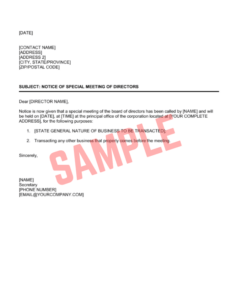
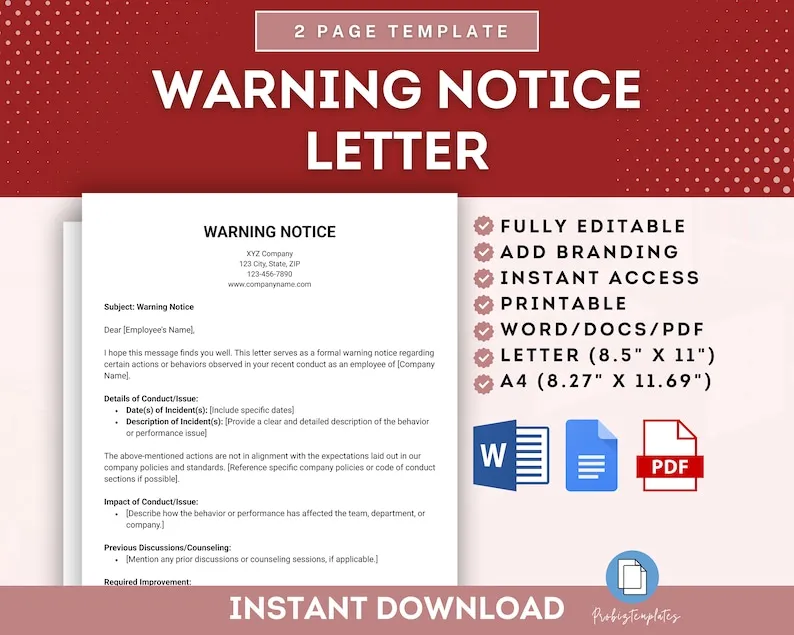
Sample Recording Option Warning Notice Letter Template
This template provides a solid foundation. Remember to replace bracketed information [like this] with your specific details.
[Your Company Letterhead]
Date:
[Date]
Recipient:
[Recipient’s Name]
[Recipient’s Title]
[Recipient’s Organization]
[Recipient’s Address]
Subject:
Notice Regarding Recording of Conversations
Dear [Recipient’s Name],
This letter serves to inform you that conversations occurring within [specify context, e.g., our customer service lines, employee training sessions, specific project meetings] may be recorded. This practice is implemented to ensure quality assurance, for training purposes, to maintain accurate records, and for regulatory compliance.
By continuing your participation in [specify context, e.g., this call, these meetings, our services], you acknowledge and consent to the recording of your conversation. We are committed to maintaining the highest standards of privacy and data security regarding any collected audio.
The recordings will be securely stored for a period of [specify duration, e.g., 90 days, 1 year] and will only be accessed by authorized personnel. These recordings will be used solely for the stated purposes and will not be shared with unauthorized third parties unless required by law.
If you have any questions or concerns regarding our recording practices or wish to obtain further information about our privacy policy, please do not hesitate to contact [Contact Person/Department] at [Phone Number] or [Email Address]. Your understanding and cooperation in this matter are greatly appreciated.
Sincerely,
[Your Name]
[Your Title]
[Your Company Name]
[Your Company Website (Optional)]
Implementing a clear and consistent strategy for notifying individuals about recorded interactions is more than a legal obligation; it’s a testament to ethical business practices. Utilizing a robust recording option warning notice letter template empowers organizations to navigate the complexities of consent and privacy with confidence, fostering an environment of transparency and trust. This proactive approach helps protect both your organization and the individuals with whom you interact, ensuring all parties are fully informed and aware.
Regularly review your notification processes and templates to ensure they remain compliant with evolving legal standards and industry best practices. Staying informed about privacy regulations, such as GDPR or CCPA, is vital for any entity engaging in recording. Empowering your team with a clear framework for these communications ultimately strengthens your operational integrity and builds stronger relationships.