Navigating the intricacies of property rental can be a complex affair, especially when it comes to the legal procedures for ending a tenancy. For landlords and tenants alike in England, understanding how to properly conclude an Assured Shorthold Tenancy (AST) is paramount to avoiding disputes and ensuring a smooth transition. A critical component of this process is the correct use of an assured shorthold tenancy notice template, which serves as the formal declaration of intent to vacate or repossess a property.
Failing to issue the correct notice, or completing it incorrectly, can lead to significant delays, legal challenges, and financial penalties for either party. This comprehensive guide will demystify the process, explain the different types of notices, and provide essential insights into creating and serving a legally compliant notice. By the end, you’ll have a clear understanding of the components that make up an effective assured shorthold tenancy notice template and why its precise application is so vital.
Understanding Assured Shorthold Tenancies and Notice Periods
An Assured Shorthold Tenancy (AST) is the most common type of residential tenancy in England, used for the vast majority of private rentals. It grants tenants certain protections while allowing landlords to regain possession of their property under specific conditions. Knowing the legal framework of an AST is the first step towards understanding how to end one correctly.
What is an Assured Shorthold Tenancy (AST)?
An AST typically involves a private landlord letting a property to an individual or group of tenants for a specific period, usually six or twelve months. During this fixed term, both the landlord and tenant are generally bound by the terms of the tenancy agreement. Once the fixed term ends, the tenancy can either be renewed, or it can automatically become a ‘periodic tenancy,’ continuing on a month-by-month basis, unless a new fixed-term agreement is signed.
The agreement sets out the rights and responsibilities of both parties, including rent, maintenance, and the rules around notice periods. It’s crucial for both landlords and tenants to keep a copy of this document and refer to it when issues arise. For instance, any discussions about an assured shorthold tenancy notice template must always refer back to the original terms agreed upon.
Different Types of Notice for Ending an AST
When it comes to ending an AST, there are several distinct types of notice, each with its own legal basis and requirements. The most common notice issued by landlords to regain possession of their property without tenant fault is a Section 21 notice, often referred to as a ‘no-fault’ eviction. This type of notice does not require the landlord to give a reason for wanting the property back.
Conversely, a Section 8 notice is used when a tenant has breached the terms of their tenancy agreement, such as failing to pay rent or causing damage to the property. Tenants also have the right to serve notice to end their tenancy, typically called a ‘notice to quit,’ adhering to the notice periods stipulated in their agreement. This article will primarily focus on the landlord’s Section 21 notice, which often utilizes an assured shorthold tenancy notice template.
Key Legal Requirements for a Valid Notice
For a notice to end an AST to be legally valid, it must meet several stringent requirements. For a Section 21 notice, the most critical requirement since October 2015 is that it must be given on Form 6A, the prescribed legal form. This form ensures that all necessary information is included and presented correctly.
Furthermore, specific preconditions must be met before a Section 21 notice can be issued. These include:
- The tenant’s deposit must be protected in a government-approved scheme, and prescribed information given to the tenant.
- The tenant must have received an Energy Performance Certificate (EPC) for the property.
- The tenant must have received a Gas Safety Certificate (if applicable) at the start of the tenancy and annually thereafter.
- The tenant must have been provided with the government’s ‘How to Rent’ guide at the start of the tenancy.
Failure to comply with any of these requirements can invalidate the notice, leading to significant delays if the landlord needs to seek a possession order through the courts. It’s estimated that tens of thousands of eviction notices are declared invalid each year due to such errors, underscoring the need for precision when using an assured shorthold tenancy notice template.
Crafting an Effective Assured Shorthold Tenancy Notice Template
Creating a notice that stands up to legal scrutiny requires attention to detail and a thorough understanding of current legislation. While a template provides a starting point, tailoring it to your specific situation is crucial. An effective assured shorthold tenancy notice template removes ambiguity and clearly communicates intentions.
Essential Information for Your Notice
Every legally sound assured shorthold tenancy notice template must contain specific pieces of information to be valid. Accuracy here is non-negotiable. Missing or incorrect details can invalidate the entire notice, causing frustrating delays and additional costs.
The critical information to include in any notice comprises:
- The full names and current addresses of both the landlord(s) and the tenant(s).
- The full address of the property being let.
- The date the notice is issued.
- The date by which possession of the property is required (this must align with the minimum legal notice period).
- A clear statement referencing the relevant section of the Housing Act 1988 (e.g., Section 21(1) or Section 21(4)).
- The landlord’s signature.
Additionally, for Section 21 notices, it’s vital to use the official Form 6A and complete all sections accurately.
Common Pitfalls to Avoid When Issuing Notice
Even with a reliable assured shorthold tenancy notice template, mistakes can occur, rendering the notice invalid. Awareness of these common pitfalls can save considerable time and stress. A frequent error is miscalculating the notice period; for a Section 21 notice, tenants must generally be given at least two months’ notice.
Other common mistakes include:
- Issuing a Section 21 notice during the first four months of an original fixed-term tenancy.
- Using an outdated version of Form 6A, as the prescribed forms can be updated by the government.
- Failing to properly protect the tenant’s deposit or not providing the prescribed information to the tenant.
- Not providing the tenant with a valid EPC, Gas Safety Certificate, or the ‘How to Rent’ guide at the correct times.
- Serving the notice incorrectly, which brings us to the next crucial point.
The Importance of Proof of Service
Serving the notice correctly is just as important as drafting it accurately. You must be able to prove that the tenant received the notice. Without proof of service, a court may not grant a possession order, even if the assured shorthold tenancy notice template was perfectly completed. It is important for landlords to keep meticulous records.
Recommended methods for serving a notice and obtaining proof include:
- First Class Post: Obtain a certificate of posting from the post office.
- Recorded Delivery: While it offers proof of delivery, some tenants may refuse to sign for it.
- Hand Delivery: Have an independent witness present, and ask the tenant to sign an acknowledgment of receipt.
- Process Server: A professional service that ensures proper delivery and provides a sworn statement as proof.
Always check your tenancy agreement, as it may specify agreed methods for serving notices.
Sample Assured Shorthold Tenancy Notice Template (Section 21)
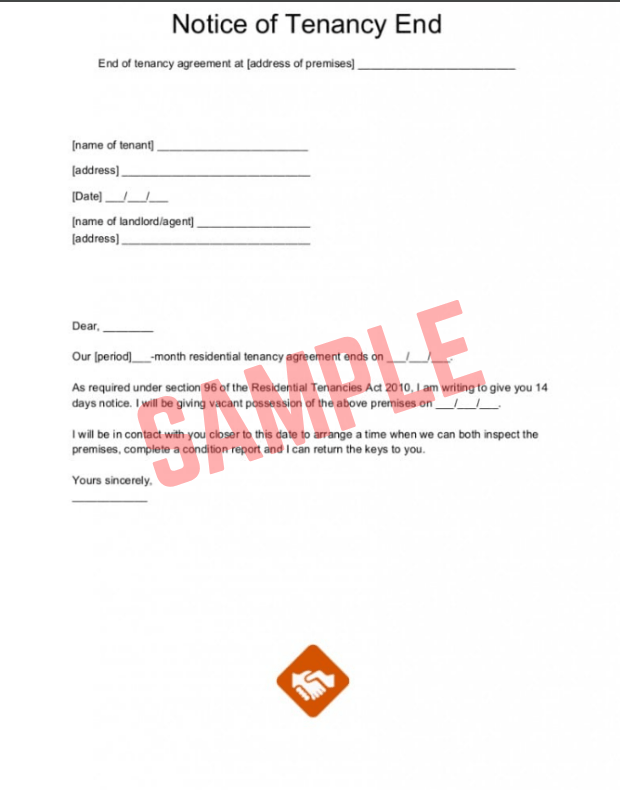
Here is a simplified sample of what a Section 21 assured shorthold tenancy notice template (Form 6A) looks like in principle. Please note: This is an illustrative example and not the official Form 6A. You must always use the official, most up-to-date Form 6A available from GOV.UK for a legally valid Section 21 notice.
FORM 6A: NOTICE SEEKING POSSESSION OF A PROPERTY LET ON AN ASSURED SHORTHOLD TENANCY (Under Section 21 of the Housing Act 1988)
1. Address of the property to which this notice relates: [Full Property Address, including Postcode]
2. Names of the tenant(s): [Full Name of Tenant 1] [Full Name of Tenant 2, if applicable]
3. Names of the landlord(s): [Full Name of Landlord 1] [Full Name of Landlord 2, if applicable]
4. Date notice issued: [DD/MM/YYYY]
5. Date after which possession is required: [DD/MM/YYYY – must be at least two months after the issue date, and careful consideration for fixed term or periodic tenancy end dates]
Important Information for the Tenant:
- This notice is the first step in seeking possession of the property. The landlord cannot force you to leave without a court order.
- You are entitled to remain in the property until the date specified above.
- You may be able to challenge this notice if the landlord has not complied with legal requirements (e.g., deposit protection, EPC, Gas Safety Certificate, ‘How to Rent’ guide).
- If you do not leave by the date required, the landlord may apply to the court for a possession order.
Landlord’s Declaration: I confirm that, to the best of my knowledge and belief, all relevant requirements have been met to issue this notice.
Signature of Landlord(s) / Landlord’s Agent: [Signature]
Print Name: [Printed Name of Signatory]
Date of Signature: [DD/MM/YYYY]
Address for correspondence: [Landlord’s/Agent’s Correspondence Address] [Email Address] [Phone Number]
Remember, this illustration simplifies the official Form 6A. The official form will have additional boxes for statutory declarations and information regarding deposit schemes and provided documents. Always download the latest version directly from government resources to ensure compliance.
Successfully navigating the termination of an Assured Shorthold Tenancy hinges on meticulous adherence to legal procedures. From drafting the notice to ensuring its proper service, every step requires precision and a clear understanding of the law. Utilizing a robust assured shorthold tenancy notice template significantly simplifies the process, providing a structured framework that minimizes the risk of error.
By understanding the different types of notices, fulfilling the preconditions, and diligently completing and serving the correct form, landlords and tenants can ensure a legally compliant and less stressful end to their tenancy agreement. Should any doubt arise, or if the situation is particularly complex, it is always advisable to seek professional legal advice from a solicitor or housing expert to safeguard your interests and ensure all legal obligations are met.