Changing how often your employees get paid can be a significant administrative task, requiring careful planning and clear communication. A well-crafted payroll frequency change notice template is essential for ensuring a smooth transition and maintaining positive employee relations. Without a proper communication strategy, employees might experience confusion, financial stress, or even resentment, which can negatively impact morale and productivity.
This article will guide you through the critical aspects of adjusting your pay schedule, from understanding the reasons behind such a change to crafting the perfect notification. We’ll explore the legal implications, best practices for communication, and provide a comprehensive sample notice. By the end, you’ll have the tools to manage this process effectively and professionally.
Understanding the Importance of a Clear Payroll Schedule Adjustment
Adjusting your company’s payroll schedule is more than just an internal accounting decision; it directly impacts every employee. A clear and timely payroll schedule adjustment is crucial for maintaining trust and ensuring legal compliance. Mishandling this communication can lead to significant headaches for HR and finance departments, along with disgruntled staff.
Why You Might Need to Change Payroll Frequency
There are several common reasons why a business might consider altering its payroll frequency. One primary driver is often cost savings, as processing payroll less frequently can reduce administrative fees and banking charges. For example, moving from weekly to bi-weekly payments might cut processing costs by half over the year. Another reason could be to align with industry standards, making it easier to benchmark benefits and compensation packages.
Business growth and expansion can also necessitate a change, especially when integrating new systems or acquiring other companies with different pay cycles. Sometimes, it’s about simplifying operations, such as consolidating different pay periods across various departments or locations into a single, unified schedule. Ensuring your payroll system is efficient and compliant is key to long-term success.
Legal and Employee Relations Considerations
Before implementing any change to payroll frequency, it’s vital to consider the legal landscape. Federal and state laws often dictate minimum pay frequencies, and some states have stricter requirements than others. For instance, California generally requires employers to pay employees at least twice a month, while New York mandates weekly payment for manual workers. Always consult with legal counsel or a payroll specialist to ensure full compliance with all applicable regulations.
Beyond legalities, employee morale and relations are paramount. Employees rely on their paychecks for budgeting and managing their personal finances. A sudden or poorly communicated change can cause significant inconvenience and anxiety. Proactive, transparent communication, ideally utilizing a robust payroll frequency change notice template, can mitigate these concerns and foster a sense of understanding and cooperation.
Key Elements of an Effective Payroll Change Communication
An effective payroll change communication goes beyond merely announcing a new date. It needs to be informative, reassuring, and address potential questions proactively. The core of this communication should be clarity about the “what,” “why,” and “how” of the change. Explain the business reasons behind the adjustment, ensuring employees understand the context rather than just the directive.
Crucially, outline the specific impact on employees, including when their last payment under the old schedule will occur and when the first payment under the new schedule will arrive. Providing resources for employees to plan their finances, such as a contact person for questions or access to financial planning tools, can be extremely helpful. A well-structured notice template helps ensure all these vital points are covered consistently.
Crafting an Effective Payroll Frequency Change Notice
The success of your payroll frequency adjustment hinges on how effectively you communicate it. A clear, comprehensive, and empathetic notification is not just a formality; it’s a strategic tool for maintaining employee trust and ensuring a smooth transition. When preparing your communication, think about your audience and their potential concerns.
Essential Components of Your Notification
Every effective **payroll frequency change notice template** should contain several key pieces of information to ensure clarity and avoid confusion. Here’s a breakdown of what to include:
- Official Company Letterhead and Date: Lends professionalism and authenticity.
- Recipient Information: Clearly state who the notice is for (e.g., "All Employees").
- Clear Subject Line: Instantly communicates the purpose of the email/letter (e.g., "Important Update: Change in Payroll Frequency").
- Statement of Change: Directly state the old frequency and the new frequency.
- Effective Date: Crucially, specify when the new payroll schedule will officially begin.
- Reason for Change: Briefly and transparently explain the business rationale behind the adjustment. This helps employees understand the context.
- Impact on Employees: Detail how the change will affect pay dates, including the final payment date under the old system and the first payment date under the new system. Address any potential "gap" periods and how they will be handled.
- Transition Period Details (if applicable): Explain any special arrangements for the initial transition, such as bridge payments or adjusted pay periods to minimize disruption.
- Compensation and Benefits Statement: Reassure employees that their annual salary or hourly rate and benefits remain unchanged.
- Call to Action/Contact Information: Provide a clear point of contact (e.g., HR department, specific email address) for any questions or concerns.
- Acknowledgment (Optional but Recommended): Requesting a signed acknowledgment can confirm employees have received and understood the notice.
Best Practices for Distribution and Follow-Up
Once your **payroll frequency change notice template** is complete, the next step is effective distribution. Don’t rely on a single method; use a multi-channel approach to ensure everyone receives the information. This could include:
- Email: Send the notice via company email to all employees.
- Physical Mail/Hand Delivery: For employees without regular email access or as a formal backup.
- Company Intranet/Portal: Post the notice prominently on your internal communications platform.
- Team Meetings: Hold dedicated meetings to explain the change, present the notice, and facilitate a Q&A session. This allows for immediate clarification and addresses anxieties in person.
Follow-up is just as important as the initial distribution. Consider scheduling informational sessions or creating a dedicated FAQ document to answer common questions. Be prepared for a range of reactions and ensure your HR team is well-equipped to handle individual concerns with empathy and accurate information. Consistent communication during the transition period is key to preventing misunderstandings and maintaining employee satisfaction.
Sample Payroll Frequency Change Notice Template
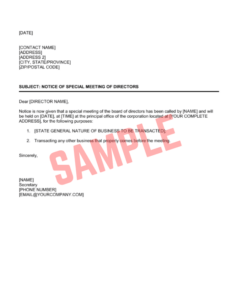
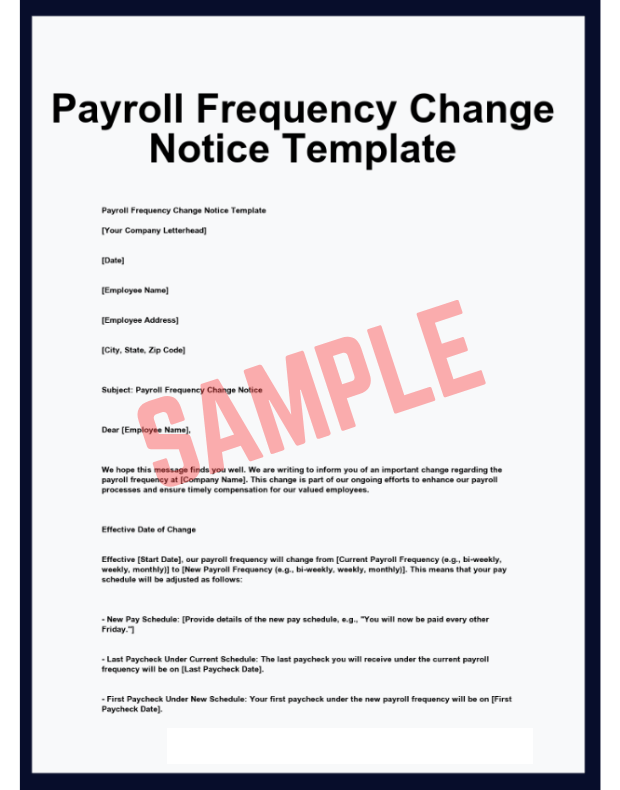
Below is a comprehensive example of a **payroll frequency change notice template** that you can adapt for your organization. This template includes all the essential elements discussed, designed for clarity and ease of understanding.
[Your Company Letterhead]

[Date]

**Subject: Important Update Regarding Payroll Frequency**

Dear [Employee Name, or All Employees],

This notice is to inform you of an upcoming change to our company's payroll frequency, effective [New Effective Date, e.g., October 1, 2024]. This adjustment is part of our ongoing efforts to streamline administrative processes, enhance efficiency, and align our operations with current industry standards.

Currently, employees are paid on a [Current Payroll Frequency, e.g., weekly] basis. Beginning with the effective date, your pay will transition to a [New Payroll Frequency, e.g., bi-weekly] schedule. This means payments will be issued every two weeks on [Specify New Pay Day, e.g., Friday].

Here's what this change will mean for your upcoming paychecks:

*   **Last Payment under Current Schedule:** Your final [Current Payroll Frequency] payment will be issued on [Date of Last Current Pay Day], covering the period from [Start Date of Last Current Pay Period] to [End Date of Last Current Pay Period].
*   **First Payment under New Schedule:** Your first [New Payroll Frequency] payment will be issued on [Date of First New Pay Day], covering the period from [Start Date of First New Pay Period] to [End Date of First New Pay Period].

We understand that a change in payroll frequency can impact personal financial planning. Please be assured that this change will not affect your annual salary or hourly rate of pay, nor will it alter your current benefits package. The total compensation you receive over the year will remain the same.

To help manage this transition, we will be holding informational sessions on [Dates and Times, e.g., September 15th and 17th at 10:00 AM in the Main Conference Room] to answer any questions you may have. We are also preparing a comprehensive FAQ document that will be available on the company intranet by [Date].

If you have immediate questions or concerns, please do not hesitate to contact [HR Department/Specific Contact Person] at [Email Address] or [Phone Number].

We appreciate your understanding and cooperation as we implement this important operational improvement.

Sincerely,

[Your Name/HR Department]
[Your Title]
This template provides a clear framework for communicating a payroll frequency change. Remember to replace the bracketed information with your specific company details. It ensures that employees are fully informed about the upcoming change, the reasons behind it, and its direct impact on their pay schedule.
Navigating a payroll frequency change requires more than just updating internal systems; it demands meticulous communication. Utilizing a well-structured payroll frequency change notice template can significantly ease the transition for both your organization and your employees. By being transparent, providing clear details, and offering avenues for questions, you foster a sense of security and trust, even amidst operational adjustments.
A thoughtful approach to this type of update ensures compliance with labor laws and maintains positive employee morale. Taking the time to craft a comprehensive notice, backed by a clear communication plan, will ultimately lead to a smoother implementation and a more satisfied workforce.