Navigating the complexities of landlord-tenant relationships can often lead to situations where formal communication becomes necessary. When a tenant breaches their lease agreement, a landlord typically needs to provide a clear, written notification outlining the violation and the steps required to fix it. This is where a well-crafted 14 day notice to remedy template becomes an invaluable tool, ensuring legal compliance and a clear path forward for both parties.
Understanding your rights and responsibilities as a property owner or manager is crucial for maintaining a fair and lawful rental environment. A notice to remedy serves as a formal warning, giving the tenant a specific timeframe—often 14 days, depending on local laws—to correct the issue before further action, such as eviction proceedings, can commence. This article will delve into the critical aspects of such notices, providing insights into their purpose, essential components, and a practical 14 day notice to remedy template to guide you.
Properly utilizing this legal instrument can prevent minor issues from escalating into major disputes, potentially saving time and legal costs. We will explore what constitutes a lease breach, the necessary legal steps, and how to draft a notice that is both effective and legally sound. By the end, you will have a comprehensive understanding of how to protect your property and uphold the terms of your rental agreements.
Understanding the Purpose of a 14 Day Notice to Remedy
A 14 day notice to remedy serves as a foundational step in addressing lease violations. It’s not merely a piece of paper; it’s a formal declaration that a specific term of the rental agreement has been broken. This document acts as a safeguard for both landlords and tenants, providing a structured opportunity to resolve issues without immediate legal escalation. Its primary purpose is to ensure due process and transparency in landlord-tenant interactions.
Furthermore, this notice often fulfills a legal prerequisite before a landlord can initiate more severe actions, such as eviction. Many state and local laws mandate that landlords provide tenants with a chance to “cure” or fix a breach within a specified period. Failing to issue a proper notice could jeopardize any subsequent legal proceedings, making a precise 14 day notice to remedy template indispensable.
What Constitutes a Breach of Lease Agreement?
A breach of a lease agreement occurs when either the landlord or the tenant fails to uphold their contractual obligations. For tenants, common examples include non-payment of rent, unauthorized pets, causing significant property damage, or excessive noise disturbances. Each lease agreement is unique, so specific breaches must be directly referenced within the signed document.
The clarity of the lease agreement itself is paramount. Vague terms can lead to disputes about what constitutes a violation. Therefore, a comprehensive lease should explicitly detail tenant responsibilities, payment schedules, and rules regarding property use. This foundation makes it easier to identify and address any potential non-compliance using a formal notice.
Legal Requirements and Tenant Responsibilities
Landlord-tenant laws vary significantly by jurisdiction, making it essential to understand local statutes. Most regions require that a notice to remedy specifies the breach, the required remedy, and the deadline for completion. Tenants, in turn, have the responsibility to either rectify the violation within the given timeframe or vacate the premises.
Failure to remedy the breach within the 14-day period typically grants the landlord the right to pursue further legal action, such as filing for eviction. However, tenants also have rights, including the right to receive proper notice and, in some cases, to dispute the alleged breach. Consulting local housing authorities or legal counsel can provide specific guidance tailored to your area.
When to Issue a Notice to Remedy
Issuing a notice to remedy should generally follow informal attempts to resolve the issue. If a verbal conversation or an informal written reminder doesn’t lead to compliance, the formal notice becomes necessary. It’s a clear signal that the landlord is prepared to take legal steps if the violation persists.
This notice is also crucial before any thought of eviction. Skipping this vital step can result in legal setbacks and delays if an eviction case goes to court. Statistics show that improperly issued notices are a leading cause of eviction case dismissals, highlighting the importance of accuracy.
Crafting an Effective 14 Day Notice to Remedy Template
Creating a notice that is both legally sound and clearly understood is vital for its effectiveness. A poorly written notice can be challenged in court, potentially delaying or even derailing a landlord’s attempts to resolve a tenancy issue. Attention to detail and adherence to legal standards are crucial when preparing this document. Every element must be precise, leaving no room for misinterpretation by the tenant or a judge.
The goal is to provide a document that unequivocally communicates the issue, the required action, and the consequences of inaction. This careful construction supports the landlord’s position and clearly outlines the tenant’s obligations. Using a standardized 14 day notice to remedy template helps ensure all necessary information is included.
Essential Components of a Valid Notice
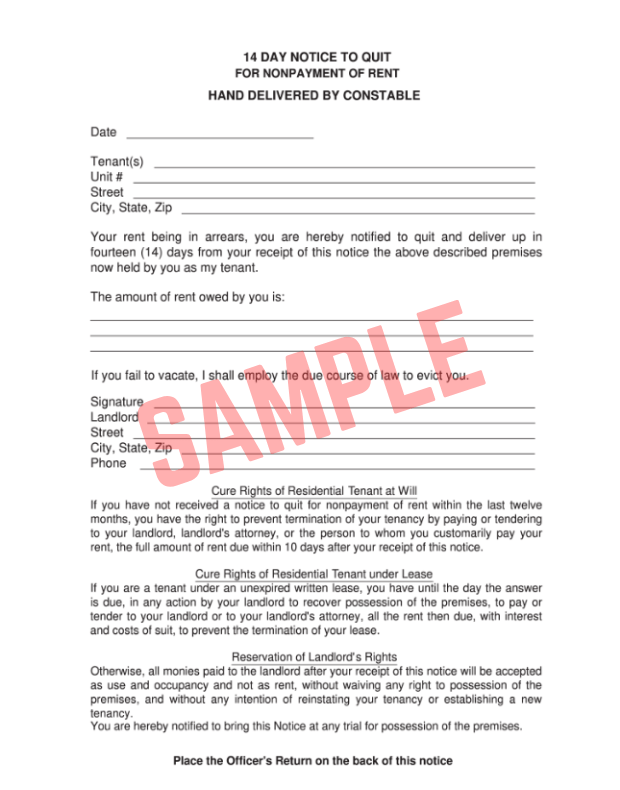
A legally valid 14-day notice to remedy must contain several key pieces of information to be enforceable. Omitting any of these components could render the notice defective.
- Date of Notice: The precise date the notice is issued.
- Landlord/Property Management Details: Full name, address, and contact information of the landlord or authorized agent.
- Tenant Details: Full name(s) of all tenants listed on the lease agreement.
- Property Address: The full address of the rental unit.
- Lease Agreement Reference: A clear reference to the original lease agreement, including its start date.
- Detailed Description of the Breach: Specific facts regarding the violation, including dates, times, and nature of the issue (e.g., “Failure to pay October rent by the 1st,” “Unauthorized pet—a large dog—observed on October 5th”).
- Required Remedy: A precise explanation of what the tenant must do to fix the breach (e.g., “Pay outstanding rent of $X,” “Remove the unauthorized pet from the premises”).
- Deadline for Remedy: A clear statement that the tenant has 14 days from the date of receipt of the notice to remedy the breach.
- Consequences of Non-Compliance: A statement that failure to remedy the breach within 14 days will result in the landlord pursuing further legal action, including but not limited to, eviction proceedings.
- Landlord’s Signature: The landlord or authorized agent’s signature.
- Certificate of Service: A section detailing how and when the notice was delivered to the tenant (e.g., certified mail, hand-delivery with witness).
Tips for Clear and Concise Language
The language used in a notice to remedy must be straightforward and unambiguous. Avoid legal jargon where possible, and when necessary, explain terms simply. The notice should be written at an accessible reading level, ensuring the tenant fully understands the gravity and specifics of the situation.
Maintain a professional and objective tone throughout the document. Emotional language or personal attacks can undermine the notice’s legal standing. Focus solely on the facts of the breach and the required resolution. Always proofread the document multiple times to catch any errors or ambiguities before serving it to the tenant.
Sample 14 Day Notice to Remedy Template
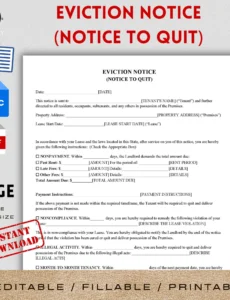
Here is a general sample 14 day notice to remedy template. Remember to customize it with your specific details and verify compliance with your local and state laws. This template provides a solid foundation for addressing various lease violations, from overdue rent to property damage.
[Your Full Name/Company Name]
[Your Full Address]
[Your City, State, Zip Code]
[Your Phone Number]
[Your Email Address]

[Date]

[Tenant's Full Name(s)]
[Tenant's Current Address (Rental Property Address)]
[Tenant's City, State, Zip Code]

Subject: 14-Day Notice to Remedy Breach of Lease Agreement

Dear [Tenant's Full Name(s)],

This letter serves as a formal notice regarding a breach of your lease agreement for the property located at [Rental Property Address], dated [Date of Lease Agreement].

It has come to our attention that you are in violation of the following terms of your lease agreement:

Description of Breach(es):
[Clearly and specifically describe the violation(s). Be factual and refer to the lease section if applicable.]
Example 1 (Unpaid Rent): Failure to pay the full rent amount due for the month of [Month, Year]. According to Paragraph [Paragraph Number] of your lease agreement, rent of $[Amount] was due on [Due Date]. As of this notice, an outstanding balance of $[Outstanding Amount] remains unpaid.

Example 2 (Unauthorized Pet): Maintaining an unauthorized pet (e.g., a dog) on the premises, in violation of Paragraph [Paragraph Number] of your lease agreement which explicitly prohibits pets without prior written consent. The unauthorized pet was observed on [Date(s)] at [Time(s)].

Example 3 (Property Damage): Causing damage to the rental property, specifically [Describe Damage, e.g., "a large hole in the living room wall," "broken window in the kitchen"], in violation of Paragraph [Paragraph Number] of your lease agreement.

Required Remedy:
You are hereby required to remedy the aforementioned breach(es) within fourteen (14) days from the date you receive this notice.

[Clearly and specifically state what the tenant must do to remedy the breach.]
Example 1 (Unpaid Rent): You must pay the full outstanding balance of $[Outstanding Amount] within the 14-day period.

Example 2 (Unauthorized Pet): You must remove the unauthorized pet from the premises permanently within the 14-day period.

Example 3 (Property Damage): You must repair the damage to [Specific Area, e.g., "the living room wall"] or arrange for its repair by a qualified professional to the satisfaction of the landlord, and provide proof of such repair, within the 14-day period.

Consequences of Failure to Remedy:
Please be advised that if you fail to remedy the breach(es) as described above within the fourteen (14) day period, your tenancy will be terminated, and we will proceed with further legal action, including but not limited to, filing an unlawful detainer (eviction) lawsuit against you to regain possession of the property, as permitted by [Your State] law. You may also be held responsible for all costs and fees associated with such legal action, including attorney's fees and court costs.

We urge you to take immediate action to resolve this matter. If you have any questions or wish to discuss this further, please contact us at [Your Phone Number] or [Your Email Address] within the 14-day period.

Sincerely,

[Your Signature]

[Your Printed Name]
[Your Title/Role, e.g., Landlord/Property Manager]

---
Certificate of Service:

This Notice was served on [Tenant's Full Name(s)] on [Date of Service] by:
[ ] Personal Delivery
[ ] Certified Mail, Return Receipt Requested
[ ] First-Class Mail
[ ] Other (Specify): ____________________________________

By: _______________________________
   [Your Name/Agent's Name]
This template ensures all critical details are included, providing a clear and enforceable document. It allows for adaptation to specific circumstances while maintaining a consistent legal structure. Always retain a copy of the served notice for your records, along with proof of delivery.
Effectively managing a rental property requires diligence and adherence to legal processes. Understanding and properly utilizing a 14 day notice to remedy template is a cornerstone of this responsibility. It empowers landlords to address lease violations promptly and professionally, fostering a more stable and compliant rental environment for everyone involved.
The proper application of this notice not only protects the landlord’s investment but also provides tenants with a fair opportunity to correct issues before they escalate. By using clear language, detailing specific breaches, and outlining required remedies, you ensure transparency and adherence to legal standards. This proactive approach minimizes conflict and supports a healthy landlord-tenant relationship, even when difficulties arise.