Navigating the end of a tenancy can be a complex process, often laden with specific legal requirements and timelines. Whether you’re a tenant ready for a new chapter or a landlord needing to reclaim your property, issuing proper notice is paramount. A correctly formatted 28 day notice terminate tenancy template ensures a smooth transition and helps avoid potential legal disputes, safeguarding your rights and obligations.
Understanding the correct procedure for ending a rental agreement is crucial for both parties involved. This comprehensive guide will walk you through the necessities of such a notice, detailing its essential components and providing a clear, actionable template. By the end, you’ll be equipped with the knowledge and tools to confidently issue or receive a notice to vacate, ensuring compliance with tenancy laws.
We will explore why a 28-day notice period is often required, what information must be included in the document, and provide a practical sample for your convenience. This ensures you can properly execute a lease termination, setting clear expectations and adhering to all legal stipulations.
Understanding Lease Termination Requirements
Terminating a lease agreement requires adherence to specific legal frameworks, which vary by jurisdiction and the terms of your original rental contract. Typically, both tenants and landlords must provide a formal notice period before the tenancy can officially end. This period allows ample time for both parties to make necessary arrangements, such as finding new accommodation or preparing the property for new occupants.
Why a 28-Day Notice Period is Common
A 28-day (or one-month) notice period is a widely adopted standard in many regions for various types of tenancies, particularly month-to-month or periodic leases. This timeframe strikes a balance, offering sufficient warning without being unduly long. It provides tenants enough time to secure a new residence and landlords adequate time to market and prepare the property for re-rental.
The specific duration can, however, be influenced by the type of tenancy agreement in place. For instance, fixed-term leases often require notice aligned with the end of the term, unless a break clause is invoked. Always refer to your original lease agreement first, as it may outline different notice periods. Ignoring these contractual terms could lead to financial penalties or legal challenges.
Tenant and Landlord Obligations When Ending a Lease
Both tenants and landlords have distinct responsibilities when a tenancy is being terminated. Tenants are generally expected to pay rent until the notice period expires and leave the property in a clean, undamaged condition, allowing for fair wear and tear. They should also cooperate with property viewings for prospective new tenants during reasonable hours.
Landlords, conversely, must respect the tenant’s right to peaceful enjoyment of the property until the termination date. They are responsible for processing the security deposit according to legal guidelines, typically within a specific timeframe after the tenant vacates. Landlords must also ensure the property is legally fit for habitation until the very end of the tenancy. Transparent communication throughout this period is key to avoiding misunderstandings and ensuring a smooth transition for everyone involved.
Key Elements of an Effective Lease Termination Notice
Crafting a robust and legally sound lease termination notice is essential to protect your interests. The document must be clear, unambiguous, and contain specific information to be valid. Missing even one crucial detail could render the notice ineffective, potentially delaying the termination or leading to further disputes.
Essential Information for Your Notice
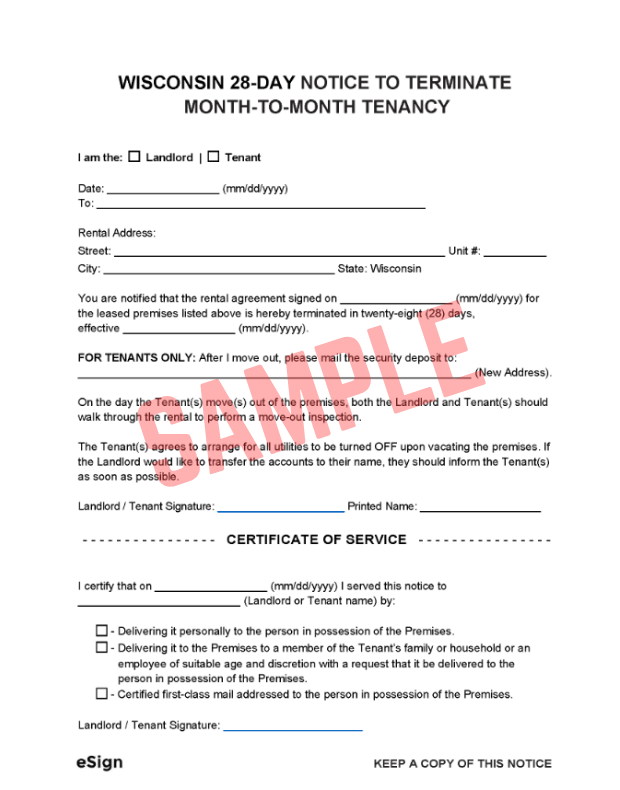
A comprehensive 28 day notice to terminate tenancy template must include several critical pieces of information. This ensures the notice is legally sound and clearly communicates the intent to end the tenancy. Without these details, the notice might be challenged or deemed invalid.
Here are the key elements your notice should contain:
- Date of Notice: The precise date when the notice is being written and issued.
- Recipient’s Name and Address: The full legal name and current address of the landlord or tenant receiving the notice.
- Sender’s Name and Address: The full legal name and current address of the landlord or tenant issuing the notice.
- Property Address: The complete address of the rental property being vacated or requested to be vacated.
- Lease Agreement Details: Reference to the original lease agreement, including the date it was signed.
- Clear Statement of Intent: An unambiguous declaration of intent to terminate the tenancy.
- Termination Date: The exact date the tenancy will officially end, calculated according to the notice period.
- Reason for Termination (if applicable and required): While often not legally required for periodic tenancies, providing a reason can sometimes be helpful.
- Forwarding Address (for tenants): Where the security deposit or any further correspondence should be sent.
- Signature: The signature of the person issuing the notice.
Proper Delivery Methods for Legal Validity
How you deliver the 28 day notice terminate tenancy template is as important as its content. Improper delivery can invalidate the notice, regardless of how perfectly it’s drafted. The goal is to prove that the recipient actually received the notice, ensuring they had ample time to respond.
Commonly accepted methods for serving a notice include:
- Certified Mail with Return Receipt: This provides a paper trail showing when the notice was sent and when it was received.
- Hand Delivery: Deliver the notice in person, ideally with a witness present, and have the recipient sign an acknowledgment of receipt.
- First-Class Mail: While less secure than certified mail, it is often permissible if supported by other evidence of mailing.
- Process Server: For situations where legal proof of service is absolutely critical, a professional process server can deliver the notice.
Always retain a copy of the notice for your records, along with any proof of mailing or delivery receipts. This documentation is invaluable should any disputes arise regarding the validity or timing of the notice. It’s also wise to check your local tenancy laws, as they may specify particular methods of service.
Sample 28 Day Notice Terminate Tenancy Template
Below is a comprehensive 28 day notice terminate tenancy template designed to be adaptable for both tenants issuing notice to a landlord and landlords issuing notice to a tenant. This sample provides a clear framework, ensuring all necessary information is included for a legally sound termination. Remember to fill in the bracketed information with your specific details.
[Your Name (Tenant) / Landlord’s Name (Landlord)]
[Your Current Address / Landlord’s Business Address]
[City, State, Zip Code]
[Phone Number]
[Email Address]
[Date]
[Landlord’s Name (if tenant)
[Landlord’s Address]
[City, State, Zip Code]
OR
[Tenant’s Name (if landlord)]
[Tenant’s Current Property Address]
[City, State, Zip Code]
Subject: Notice to Terminate Tenancy – 28-Day Notice
Dear [Mr./Ms./Mx. Last Name of Recipient],
This letter serves as formal notification of my/our intent to terminate the tenancy agreement for the property located at:
[Full Property Address, including Unit Number if applicable]
[City, State, Zip Code]
The original lease agreement for this property was signed on [Date of Original Lease Agreement]. In accordance with the terms of our lease agreement and relevant local tenancy laws, I am providing [28 days’ / one month’s] notice to terminate this tenancy.
The final date of my/our tenancy will be [Exact Termination Date – e.g., November 30, 2024]. I/We will vacate the premises completely by the end of this day, ensuring the property is clean and free of personal belongings, consistent with the terms of our lease agreement and normal wear and tear.
[**For Tenants Only:**]
I kindly request that you perform a walk-through inspection of the property on or before the termination date to assess its condition. Please contact me at [Your Phone Number] or [Your Email Address] to schedule a convenient time for this inspection.
Please send my security deposit, less any lawful deductions, to the following forwarding address:
[Your New Forwarding Address]
[City, State, Zip Code]
[**For Landlords Only:**]
I expect the property to be vacated and returned in the condition stipulated by our lease agreement, allowing for normal wear and tear. Please ensure all personal belongings are removed and the property is thoroughly cleaned by the termination date.
I will contact you to arrange a final inspection and the return of keys on or before the termination date. Any costs incurred for cleaning or repairs beyond normal wear and tear, as per the lease agreement, will be deducted from your security deposit, with an itemized statement provided.
[**For Both Parties:**]
All keys and access devices for the property will be returned to you on [Exact Termination Date]. I/We appreciate your understanding and cooperation throughout this process.
Sincerely,
[Your Printed Name (Tenant) / Landlord’s Printed Name (Landlord)]
[Your Signature (Tenant) / Landlord’s Signature (Landlord)]
This 28 day notice terminate tenancy template is designed for clarity and completeness. Always review your local tenancy laws or consult with a legal professional if you have any specific concerns or complex circumstances. Using this template can streamline the process of ending a lease, ensuring all parties are aware of their responsibilities.
Effectively managing a tenancy termination, whether as a landlord or a tenant, hinges on clear communication and proper legal adherence. Utilizing a well-structured document like a 28 day notice terminate tenancy template provides a foundation for a smooth transition, minimizing potential conflicts and safeguarding legal rights. Remember that local laws can vary, so always confirm your specific regional requirements.
By taking the time to prepare and serve a formal notice correctly, you ensure that the end of a tenancy is handled professionally and respectfully. This proactive approach benefits everyone involved, allowing for proper planning and a seamless changeover.