Managing a self storage facility comes with its unique set of challenges, and one of the most difficult situations to navigate is when a tenant fails to uphold their end of the rental agreement. Non-payment of rent can quickly accumulate, impacting your business’s bottom line and requiring swift, yet legally sound, action. Having a robust self storage eviction notice template is not just convenient; it’s an essential tool for maintaining operational efficiency and legal compliance.
A well-drafted eviction notice serves as the formal communication that initiates the legal process for reclaiming a storage unit due to a tenant’s default. It protects your facility by ensuring all necessary information and timelines are clearly communicated, adhering to state-specific lien laws and property codes. This article will guide you through the critical aspects of self storage evictions, helping you understand the process and providing insights into constructing an effective notice.
We’ll cover the legal framework, essential components of a notice, and provide a clear sample to ensure your facility can confidently address delinquent accounts. Properly utilizing a self storage eviction notice template is key to minimizing legal risks and efficiently managing your units.
Understanding the Self Storage Eviction Process
The process of evicting a tenant from a self storage unit, often referred to as enforcing a lien or conducting a lien sale, is governed by specific state laws. Unlike residential evictions, which deal with a tenant’s primary residence, self storage evictions typically pertain to personal property stored within a rented space. Understanding these legal distinctions is crucial for facility owners.
Legal Foundations for Eviction
Each state has its own statutes regarding self storage facilities and the process for handling delinquent tenants. These laws dictate everything from the type of notice required to the waiting periods before a lien can be enforced or an auction can take place. Facility operators must be intimately familiar with the specific laws in their jurisdiction.
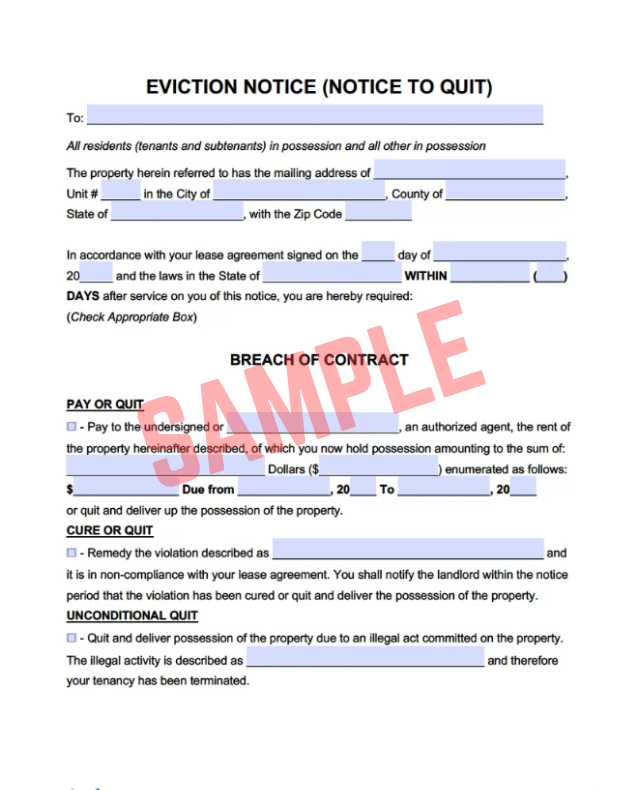
The rental agreement signed by the tenant forms the contractual basis for any action taken by the facility. This agreement should clearly outline payment terms, late fees, conditions for default, and the facility’s right to repossess or sell the contents of the unit. A strong rental agreement is your first line of defense.
Compliance with state laws is not optional. Failure to follow the exact procedures, even for minor details, can result in significant legal challenges, fines, and potential liability for the facility. Always consult legal counsel if there is any doubt about the proper steps to take.
Triggers for Issuing a Notice
The primary trigger for initiating the eviction or lien enforcement process is non-payment of rent. Once a tenant misses a payment, and often after a grace period, their account typically enters a “default” status. The rental agreement specifies when an account is considered delinquent.
While non-payment is the most common reason, some state laws or rental agreements might allow for eviction due to other significant lease violations. These could include storing prohibited items or using the unit for unauthorized activities. However, it is essential to review your specific contract and local laws carefully for such provisions.
Defining the exact moment of default, usually tied to a specific number of days past the due date, is crucial. This date then initiates the timeline for subsequent actions, including the sending of the self storage eviction notice template.
Steps Before Eviction Notice
Before sending a formal self storage eviction notice template, most facilities follow a series of preliminary steps. These actions are designed to encourage payment and avoid the need for more drastic measures. They also demonstrate good faith on the part of the facility.
Common preliminary steps include:
- Charging Late Fees: As outlined in the rental agreement, late fees are applied to overdue accounts.
- Sending Reminder Notices: Informal reminders, such as emails or phone calls, can prompt payment before further action is needed.
- Denying Access: Once an account is significantly overdue, facilities often deny the tenant access to their unit. This prevents further storage or removal of property without payment.
- Securing the Unit: Some facilities will place an overlock on the unit to prevent tenant access and secure the property.
These steps are typically followed by the formal self storage eviction notice template, which legally begins the process of enforcing the lien.
Essential Elements of a Self Storage Eviction Notice Template
An effective self storage eviction notice template must be comprehensive, clear, and legally compliant. It serves as a formal declaration of the tenant’s default and outlines the consequences if they fail to remedy the situation. Missing critical information or procedural steps can invalidate the entire process.
Critical Information to Include
Every eviction notice must contain specific details to be legally sound. This ensures the tenant fully understands their situation and the required actions. Accuracy is paramount in all information provided.
Key information includes:
- Facility Information: Full legal name, address, and contact details of the self storage facility.
- Tenant Information: Full legal name(s) of the tenant(s) and their last known mailing address.
- Storage Unit Details: The specific unit number(s) being addressed.
- Amount Due: A clear, itemized breakdown of all charges, including unpaid rent, late fees, administrative fees, and any other contractually allowed charges.
- Payment Deadline: A precise date by which the full outstanding amount must be paid to avoid further action. This date must comply with state-mandated waiting periods.
- Consequences of Non-Compliance: A clear statement detailing what will happen if the tenant fails to pay by the deadline, such as enforcement of the lien, sale of property at auction, or disposal of contents.
- Relevant Legal Statutes: Referencing the specific state statutes governing self storage liens and sales can reinforce the notice’s legal standing.
Adhering to Legal Requirements
Beyond the content, the way the notice is handled is equally important. State laws often dictate specific timelines and delivery methods that must be followed precisely. These requirements protect both the tenant’s rights and the facility’s legal standing.
Common legal requirements include:
- Specific Timelines: States often mandate minimum waiting periods (e.g., 15, 30, or 60 days) between certain actions, such as the initial default, sending the notice, and conducting a sale.
- Method of Delivery: Certified mail with a return receipt requested is almost universally required for delivering official lien or eviction notices. Some states may allow for other methods, but certified mail provides undeniable proof of mailing and receipt attempt.
- Proof of Delivery: Maintaining records of when and how the notice was sent is critical. The certified mail receipt serves as crucial evidence in case of a dispute.
- Signature and Date: The notice must be signed by an authorized representative of the storage facility and clearly dated.
Common Mistakes to Avoid
Even minor errors in the eviction process can lead to significant legal headaches for self storage operators. Awareness of common pitfalls can help ensure a smooth and compliant procedure.
Avoid these mistakes when using a self storage eviction notice template:
- Incomplete Information: Failing to include all required details, such as the full amount owed or the correct unit number.
- Incorrect Deadlines: Miscalculating the legally mandated waiting periods or payment deadlines.
- Failure to Follow State-Specific Regulations: Using a generic template without adjusting for unique state laws on notice content, delivery, or timelines.
- Lack of Proof of Delivery: Not sending the notice via certified mail or failing to retain the return receipt.
- Inconsistent Application: Treating different tenants inconsistently in the eviction process, which could lead to claims of discrimination.
- Not Consulting Legal Counsel: Proceeding without legal advice when unsure about specific state requirements or complex tenant situations.
Sample Self Storage Eviction Notice Template
Below is a sample self storage eviction notice template. This example is for illustrative purposes only and should be adapted to comply with your specific state’s laws and your facility’s rental agreement. Always review it with legal counsel.
[Your Self Storage Facility Letterhead]

[Date]

[Tenant Name(s)]
[Tenant Address]
[City, State, Zip Code]

**SUBJECT: NOTICE OF DEFAULT AND INTENT TO ENFORCE LIEN / EVICTION NOTICE**

Dear [Tenant Name(s)],

This letter serves as a formal notice that your self storage unit, Unit Number [Unit Number], located at [Your Facility Address], is currently in default under the terms of your Rental Agreement dated [Date of Rental Agreement].

As of the date of this letter, your account has an outstanding balance of **[Total Amount Due]** which includes:
*   Unpaid Rent for [Months/Period]: $[Amount]
*   Late Fees: $[Amount]
*   Administrative Fees: $[Amount]
*   Other Charges (specify): $[Amount]
*   **TOTAL AMOUNT DUE: $[Total Amount Due]**

Please be advised that pursuant to the terms of your Rental Agreement and [Your State's Relevant Self Storage Lien Statute, e.g., "Florida Statutes Chapter 83, Part IV"], your failure to pay the outstanding balance constitutes a default.

You are hereby notified that unless the **TOTAL AMOUNT DUE of $[Total Amount Due]** is received in full at our office by **5:00 PM on [Payment Deadline Date – must comply with state law, e.g., 30 days from date of notice]**, we will proceed with the enforcement of our lien. This means the contents of your storage unit will be advertised for sale and sold at public auction, or otherwise disposed of, on or after [Auction Date – must comply with state law, typically after payment deadline and advertisement period].

Your immediate payment is required to avoid further action. Payment should be made to [Payment Method, e.g., "our office during business hours" or "online at www.yourfacility.com"].

We urge you to contact us immediately at [Your Facility Phone Number] or [Your Facility Email Address] to discuss this matter and resolve your outstanding balance.

Sincerely,

[Your Name/Facility Manager Name]
[Your Title]
[Your Self Storage Facility Name]
[Your Facility Phone Number]
[Your Facility Email Address]
This sample provides a clear structure. The placeholders in brackets [] indicate where specific information for your situation must be inserted. Remember that the “Payment Deadline Date” and “Auction Date” must strictly adhere to your state’s self storage lien laws regarding notice periods. For instance, some states require a 30-day notice period before advertising for auction.
When filling out this self storage eviction notice template, always double-check all dates and monetary amounts. These details are critical and any errors could potentially invalidate the notice, delaying the recovery process and increasing costs.
Navigating the complexities of tenant defaults requires diligence and adherence to established legal procedures. Utilizing a well-crafted self storage eviction notice template is a foundational step in addressing delinquent accounts effectively. It ensures clear communication with the tenant while protecting your facility’s legal standing.
By meticulously following state-specific laws and maintaining accurate records, you can mitigate risks and efficiently manage your property. Always prioritize legal compliance and consider consulting with a legal professional to customize any template to your exact jurisdictional requirements. This proactive approach safeguards your business operations and maintains the integrity of your self storage facility.