Navigating the complexities of real estate transactions often involves understanding specific legal clauses that can impact buying and selling opportunities. One such powerful legal tool is the Right of First Refusal (ROFR), which gives a designated party the option to purchase property before it’s offered to others. When this right is triggered, a formal document is essential to kickstart the process, and this is where a well-structured right of first refusal notice template becomes invaluable.
Understanding and utilizing such a template correctly ensures all parties are aware of their rights and obligations. It provides clarity, helps avoid potential disputes, and ensures the transaction proceeds smoothly according to the terms of the initial agreement. This article will guide you through the intricacies of ROFR, highlight the critical components of an effective notice, and provide a practical right of first refusal notice template to streamline your property dealings.
Whether you are a property owner, a potential buyer, or a real estate professional, mastering the use of this notice is key. It empowers you to act decisively and legally, protecting your interests in a competitive market. Let’s delve into what makes a right of first refusal notice template a crucial asset in real estate.
Understanding The Right Of First Refusal In Real Estate Transactions
The Right of First Refusal (ROFR) is a contractual agreement that grants a specific party the option to enter into a business transaction with the owner of something, according to specified terms, before the owner can enter into that transaction with a third party. In real estate, this typically means giving an existing tenant or a neighboring landowner the first chance to buy a property. This pre-emptive right can significantly influence how and when a property is sold.
Historically, ROFRs have been used to maintain property values in specific communities or to simplify land acquisition for contiguous parcels. Approximately 10-15% of real estate transactions might involve some form of pre-emptive right, though not always a formal ROFR. Properly understanding its implications is vital for both sellers and prospective buyers.
Defining The Right Of First Refusal (ROFR)
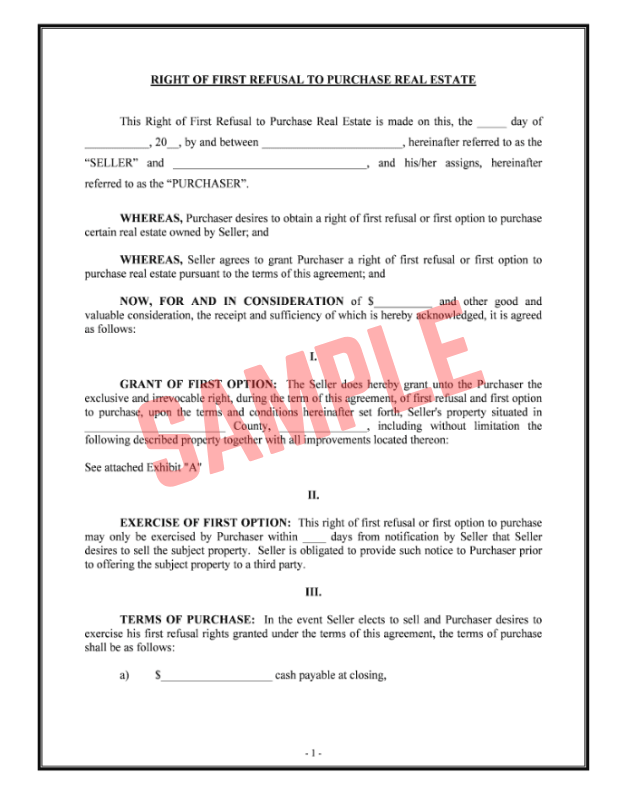
A Right of First Refusal clause is essentially a promise. It promises that if a property owner decides to sell, they must first offer the property to the ROFR holder under the same terms and conditions offered by a third-party buyer. The ROFR holder then has a set period to accept or decline this offer.
This right can be attached to various assets, but it is most commonly found in real estate agreements. It’s distinct from an option contract, which gives a party the right to buy property at a specific price within a certain timeframe, regardless of whether the owner is actively selling. A ROFR only activates when the owner decides to sell.
Key Elements Of A Valid ROFR Agreement
For a Right of First Refusal to be legally binding and effective, it must contain several key components within the underlying agreement. These elements ensure clarity and enforceability, preventing misunderstandings down the line. A clear definition of the property subject to the ROFR is paramount.
The agreement must also specify the exact trigger events that activate the ROFR, such as the seller receiving a bona fide offer from a third party. Critical details like the price, terms of sale, and the timeframe within which the ROFR holder must respond are equally important. Without these specifics, the ROFR can become ambiguous and difficult to enforce.
When A Right Of First Refusal Applies
The Right of First Refusal typically applies in several scenarios within real estate. It’s often included in lease agreements, giving tenants the opportunity to purchase the property they are renting if the landlord decides to sell. This provides stability for tenants and a potential ready buyer for landlords.
ROFRs are also common in co-ownership agreements, allowing existing partners or family members the chance to buy out a departing owner’s share. Furthermore, they can be used in adjacent property sales, where a neighbor might have the first option to acquire a contiguous parcel. In all cases, the ROFR ensures that a specific party gets the initial opportunity to purchase under specific conditions.
Crafting An Effective Right Of First Refusal Notice
When a property owner receives a legitimate offer from a third party for a property encumbered by a Right of First Refusal, it triggers the obligation to inform the ROFR holder. This notification is not merely a courtesy; it’s a legal requirement. Crafting a precise and complete right of first refusal notice is crucial to initiating the process correctly and avoiding potential legal challenges.
An incomplete or poorly worded notice can lead to delays, confusion, and even invalidate the original offer. Therefore, understanding the components of a robust notice is essential for both the seller and the ROFR holder. Using a reliable right of first refusal notice template can significantly simplify this process.
Essential Components Of The Notice
A comprehensive right of first refusal notice must clearly convey all necessary information to the ROFR holder. It should identify the property subject to the ROFR by its full address and legal description. The notice must also state the existence of the ROFR clause and reference the original agreement where it is stipulated.
Crucially, the notice must include the full terms and conditions of the third-party offer received by the seller. This encompasses the purchase price, financing terms, closing date, and any contingencies. Finally, it needs to specify the exact timeframe within which the ROFR holder must exercise their right, typically as outlined in the original ROFR agreement.
Legal Considerations For Sending A ROFR Notice
Sending a right of first refusal notice involves several legal considerations to ensure its validity and enforceability. The method of delivery is often specified in the original ROFR agreement and must be strictly followed, whether it’s certified mail, personal delivery, or another method. Proof of delivery is always recommended.
The notice must accurately reflect the terms of the third-party offer; any discrepancies could invalidate the notice or provide grounds for dispute. It’s also vital to ensure the notice is sent within the timeframe specified in the ROFR agreement after receiving a bona fide offer. Failure to adhere to these details can lead to significant legal complications and potential loss of the sale.
Common Pitfalls To Avoid
When preparing and sending a right of first refusal notice, several common mistakes can undermine its effectiveness. One major pitfall is failing to include all the material terms of the third-party offer, which can lead the ROFR holder to claim they weren’t fully informed. Another error is neglecting to provide sufficient time for the ROFR holder to respond as per the original agreement.
Additionally, sending the notice via an unapproved method, or failing to maintain proof of delivery, can create issues. Sellers sometimes attempt to alter the terms of the third-party offer when presenting it to the ROFR holder, which is typically not permissible and can invalidate the ROFR process. Always ensure strict adherence to the existing ROFR agreement to avoid these pitfalls.
Sample Right Of First Refusal Notice Template
Below is a generic right of first refusal notice template. Remember that specific legal advice should be sought for individual circumstances, and this template may need modification based on your jurisdiction and the original ROFR agreement.
[Your Company Letterhead, if applicable]

[Date]

[ROFR Holder Name]
[ROFR Holder Address]

**SUBJECT: Notice of Right of First Refusal for Property at [Property Address]**

Dear [ROFR Holder Name],

This letter serves as a formal Right of First Refusal Notice regarding the property located at [Full Property Address, including city, state, and zip code], legally described as [Legal Description of Property, e.g., Lot 5, Block A of Subdivision X]. This notice is issued pursuant to the Right of First Refusal clause contained in the agreement dated [Date of Original ROFR Agreement], between [Seller Name] (as "Grantor") and [ROFR Holder Name] (as "Grantee").

We have received a bona fide offer from a third-party purchaser to acquire the aforementioned property. The material terms of this third-party offer are as follows:

*   **Proposed Purchase Price:** $[Amount in numbers] ([Amount in words] Dollars)
*   **Deposit Amount:** $[Amount]
*   **Contingencies:** [List all contingencies, e.g., Buyer financing approval, satisfactory inspection report, appraisal contingency]
*   **Proposed Closing Date:** [Date]
*   **Other Material Terms:** [List any other significant terms, e.g., "Property sold 'as-is'," specific inclusions/exclusions]

In accordance with the Right of First Refusal agreement, you, as the ROFR holder, have the option to purchase the property under the exact same terms and conditions as the third-party offer. You must exercise this right by providing written notice of your acceptance to us within [Number] ([Number in words]) days from the date of this notice. The deadline for your response is [Specific Date and Time, e.g., October 26, 2024, at 5:00 PM EST].

If we do not receive your written acceptance to purchase the property on the exact terms outlined above by the specified deadline, your Right of First Refusal will be deemed waived for this offer, and we will be free to proceed with the sale to the third-party purchaser on these terms.

Please acknowledge receipt of this notice by signing and returning the enclosed copy of this letter. If you have any questions or require further clarification, please do not hesitate to contact us.

Sincerely,

___________________________
[Seller Name/Authorized Representative]
[Seller Contact Information]

**Acknowledgement of Receipt**

I, [ROFR Holder Name], acknowledge receipt of this Right of First Refusal Notice on this ________ day of __________________, 20____.

___________________________
[ROFR Holder Signature]
[ROFR Holder Printed Name]
This template provides a clear framework for informing the ROFR holder about an impending sale. It ensures all the critical information is communicated effectively, allowing the ROFR holder to make an informed decision. Remember, tailoring this right of first refusal notice template to the specifics of your existing agreement is essential for its legal accuracy.
Successfully navigating property sales requires careful attention to detail, especially when pre-emptive rights like the Right of First Refusal are involved. Utilizing a standardized and legally sound right of first refusal notice template not only simplifies the process but also provides a layer of protection for all parties involved. This ensures that legal obligations are met and that the transaction can proceed without unnecessary complications or disputes.
By understanding the underlying ROFR agreement, accurately conveying the third-party offer, and adhering to specified timelines, you can effectively manage this crucial step in real estate. Proper use of such a template empowers both sellers and ROFR holders to confidently proceed with property transactions, making the entire process more transparent and efficient.