Ensuring the smooth operation of rental properties often hinges on clear communication and adherence to legal protocols. One critical aspect of property management is conducting regular inspections, which safeguard the value of the asset and ensure tenant compliance with lease terms. A well-crafted property manager inspection notice template is an indispensable tool for every professional managing rental units. It not only informs tenants of an upcoming entry but also helps maintain transparency and build trust.  These notices are more than just a formality; they are a legal requirement in most jurisdictions, protecting both the landlord’s right to inspect and the tenant’s right to privacy. Crafting an effective notice from scratch can be time-consuming and prone to errors, making a reliable template essential. This article will guide you through the key components of such a template, ensuring your notices are compliant, clear, and professional, ultimately streamlining your property management tasks.
Understanding Legal Requirements for Rental Property Inspections
Before any inspection can take place, property managers must understand the specific legal guidelines governing tenant notification. Most states and localities have strict laws regarding a landlord’s right of entry, typically requiring advance notice to protect tenant privacy. These regulations often specify the minimum number of hours or days of notice that must be provided before entering a dwelling. Common requirements include a minimum of 24 to 48 hours’ written notice for non-emergency entries. The notice must also state the specific date, time, and purpose of the inspection. Without proper notification, a property manager could face legal challenges and even penalties, underscoring the importance of a compliant property manager inspection notice template. It is crucial to consult local landlord-tenant laws to ensure full compliance.
Key Elements of an Effective Inspection Notice Form
A comprehensive property manager inspection notice template should include several vital pieces of information to ensure clarity and legality. Each section plays a crucial role in informing the tenant and protecting the property manager. Neglecting any of these elements could render the notice invalid. Here are the essential components:
- Recipient Information: Full name of the tenant(s) and the address of the rental property.
- Sender Information: Name, contact details, and title of the property manager or landlord.
- Date of Notice: The date the notice is issued, which is critical for calculating the required notice period.
- Purpose of Inspection: Clearly state why the inspection is being conducted (e.g., routine maintenance, move-out inspection, lease violation check).
- Date and Time of Entry: Specific date and time window when the inspection will occur. This should respect local legal requirements for advance notice.
- Entry Procedures: Explain whether the tenant needs to be present, if keys will be used, or if a specific person will conduct the inspection.
- Tenant Responsibilities: Any actions the tenant needs to take, such as securing pets or clearing pathways.
- Contact Information for Questions: A number or email for tenants to reach out with concerns or to reschedule if legally permissible.
- Legal Disclaimers: A brief reference to relevant landlord-tenant laws regarding entry.
- Signature Line: For the property manager to sign, making the notice official.

Sample Property Manager Inspection Notice Template
Here is a clear and concise sample of a property manager inspection notice template that you can adapt for your specific needs. This example adheres to common legal standards and provides all necessary information for tenants. Utilizing such a tenant notification letter ensures professionalism and legal compliance.
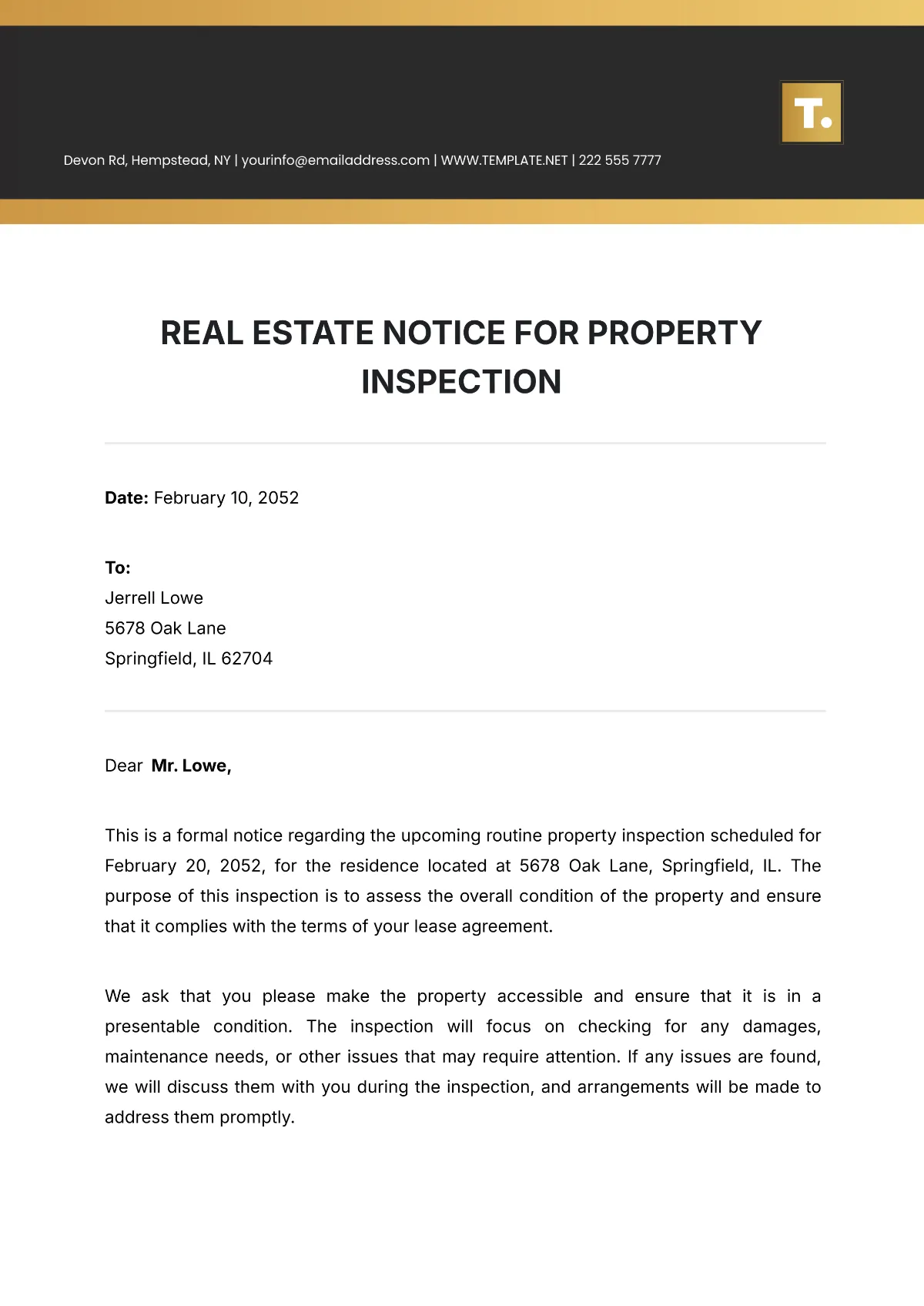
PROPERTY INSPECTION NOTICE

[Your Company Letterhead/Logo]

Date: [Current Date]

To: [Tenant Name(s)]
    [Property Address]
    [Unit Number, if applicable]
    [City, State, Zip Code]

From: [Property Manager/Landlord Name]
      [Property Management Company Name]
      [Company Address]
      [Company Phone Number]
      [Company Email Address]

Subject: Notice of Entry for Property Inspection

Dear [Tenant Name(s)],

Please be advised that authorized personnel from [Property Management Company Name] will need to enter your rental unit at the address listed above to conduct a routine property inspection. This inspection is a standard procedure outlined in your lease agreement and is essential for ensuring the proper upkeep and condition of the property.

The purpose of this inspection is to:
- Assess the general condition of the property.
- Identify any maintenance needs or potential issues.
- Verify compliance with lease terms regarding property care.

The entry will take place on:
Date: [Date of Inspection]
Time: [Start Time] - [End Time] (e.g., 10:00 AM - 12:00 PM)

Please ensure that pets are secured and any personal belongings obstructing pathways are moved prior to our visit. You are not required to be present during the inspection, but you are welcome to attend if you wish. Our staff will use their master key to access the property if you are not home.

If you have any questions or require further clarification regarding this notice, please do not hesitate to contact us at [Company Phone Number] or [Company Email Address] during business hours. We appreciate your cooperation in maintaining the quality of your home.

Sincerely,

[Signature]

[Printed Name of Property Manager/Landlord]
[Title]
This property manager inspection notice template provides a solid foundation for your communication with tenants. Customizing it with your company’s branding and specific lease clauses will enhance its effectiveness. Remember to always deliver these notices according to your local legal requirements, whether by mail, email, or in-person delivery. Implementing a standardized approach to inspection notices is a smart strategy for any property manager aiming for efficiency and legal compliance.
Using a reliable property manager inspection notice template helps prevent miscommunications and ensures all parties are aware of their responsibilities. This proactive measure not only protects your assets but also fosters a professional and respectful landlord-tenant relationship. By consistently utilizing a well-designed template, you contribute to the overall smooth operation and success of your property management endeavors, ensuring properties remain in excellent condition for years to come.