In today’s dynamic work environment, the line between essential and optional communication often blurs. Crafting clear meeting invitations is crucial for respecting everyone’s time and fostering a culture of efficiency. A well-designed not mandatory meeting notice template ensures attendees understand they have the flexibility to prioritize other tasks, yet still receive important information.

Understanding how to properly communicate that a meeting is optional can significantly impact employee morale and productivity. It empowers team members to make informed decisions about their schedules, preventing unnecessary disruptions to their workflow. This article will guide you through the elements of an effective not mandatory meeting notice template, helping you craft messages that are both clear and respectful.
Crafting an Effective Optional Meeting Invitation
Sending out an optional meeting invitation requires careful consideration to ensure the message is received as intended. You want to convey that attendance is voluntary without making the meeting seem unimportant. The goal is to provide valuable information while respecting individual time and workload, striking a balance between informing and empowering your team.
A well-structured not mandatory meeting notice template achieves several objectives. It clearly states the purpose of the gathering, offers an agenda, and provides options for those who cannot attend. This transparency helps maintain engagement even when physical presence isn’t required. Ultimately, it strengthens trust and promotes a healthier work-life integration.
When designing your notice, consider these key components to make your optional attendance memo clear and inviting:
- Clear Subject Line: Instantly indicate the meeting’s optional nature (e.g., “Optional: Project Update Discussion” or “Voluntary Session: Brainstorming Future Ideas”).
- Opening Statement: Begin by explicitly stating that attendance is not compulsory, allowing attendees to quickly grasp the nature of the invitation.
- Meeting Purpose and Agenda: Clearly outline what will be discussed and why it might be beneficial for certain individuals to attend. This helps people decide if the content aligns with their priorities.
- Date, Time, and Location/Link: Provide all necessary logistical details. Ensure virtual meeting links are easily accessible for remote participants.
- Anticipated Outcome/Value: Explain what attendees can expect to gain from participating. This motivates those who find the topic relevant to join.
- Alternative Information Access: Crucially, offer a way for non-attendees to catch up, such as a recording, meeting notes, or a summary document. This is vital for any comprehensive not mandatory meeting notice template.
- RSVP Request (Optional but Recommended): While not mandatory to attend, an RSVP can help organizers gauge potential attendance numbers. Make it clear that “no” is an acceptable response.
- Contact Person: Provide a point of contact for any questions regarding the meeting. This ensures clarity and reduces confusion.
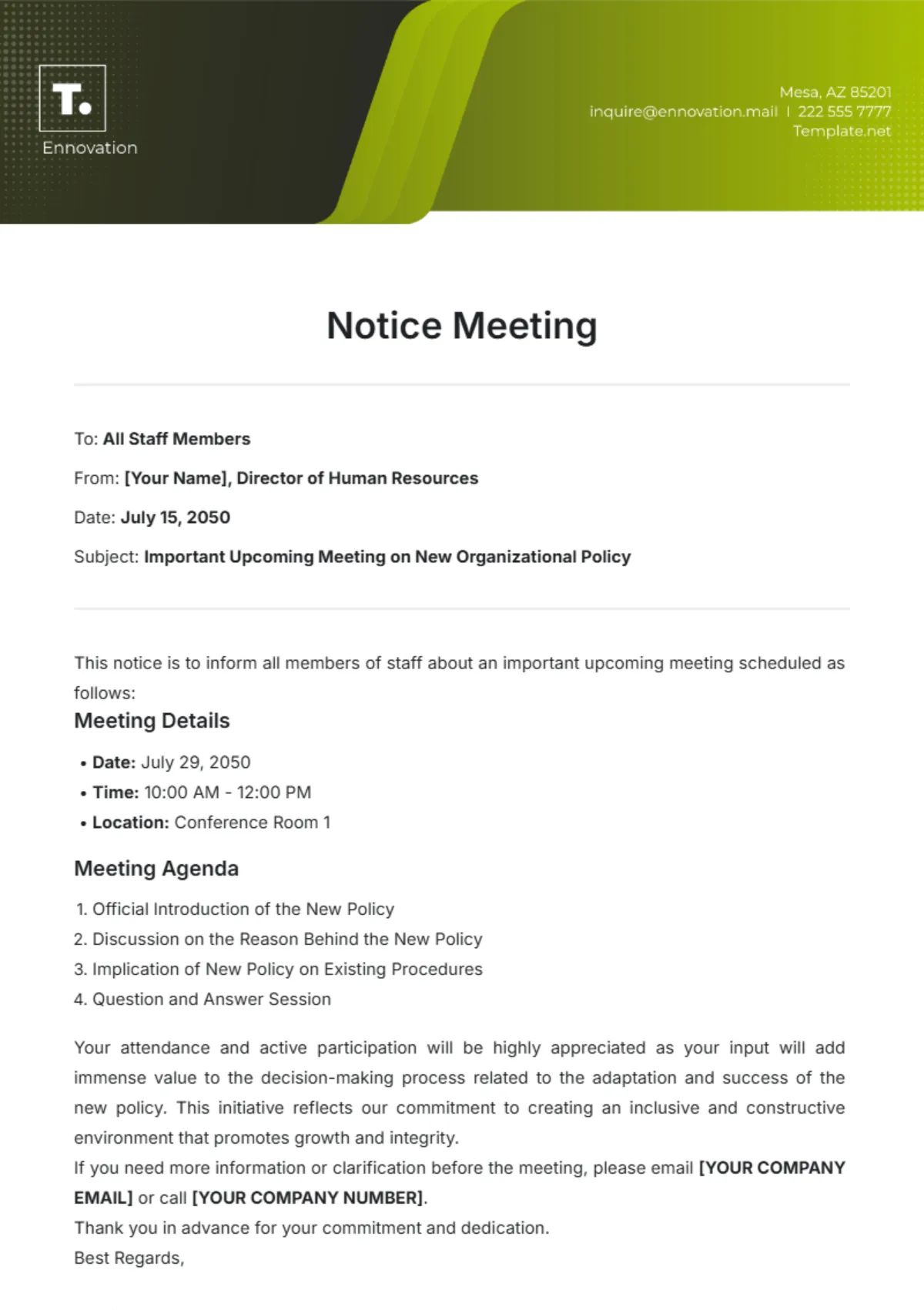
Here is a sample not mandatory meeting notice template you can adapt for your organization:
Sample Not Mandatory Meeting Notice Template
Subject: Optional Session: Quarterly Marketing Strategy Ideas

Dear Team,

You are invited to an optional brainstorming session to discuss potential new marketing strategies for the upcoming quarter. Your insights are always valuable, and this gathering aims to generate fresh ideas in a relaxed environment. Please note, attendance is entirely voluntary, and your primary projects should take precedence if there's a conflict.

We will focus on innovative approaches to digital campaigns, exploring new social media platforms, and reviewing competitor strategies. This will be an open forum for creative thinking and collaborative discussion, providing a chance to influence our future direction.

Date: [Date of Meeting]
Time: [Start Time] - [End Time] ([Time Zone])
Location: [Meeting Room Name / Virtual Link: e.g., Zoom Link]

If you are able to attend, we anticipate discussing:
*   Review of current marketing performance trends
*   Brainstorming session for new campaign themes
*   Exploration of emerging marketing technologies
*   Open discussion for any innovative ideas

For those unable to join, comprehensive meeting notes will be shared via [Team Drive / Intranet Page] by [Date]. We understand everyone has different priorities, and we appreciate your commitment to your ongoing work.

Please RSVP by [RSVP Date] so we can get a rough headcount, though it is not required. You can respond directly to this email or click [RSVP Link].

Best regards,

[Your Name/Department]
[Contact Information]
This structured approach ensures that your flexible meeting announcement effectively communicates its purpose without placing undue pressure on employees. It respects their time and encourages participation from those who genuinely find value in the discussion, embodying the best practices for a not mandatory meeting notice template.
Implementing a clear policy for voluntary attendance can significantly boost employee engagement and trust. When individuals feel respected and empowered to manage their own schedules, they are more likely to contribute positively when they do attend. This proactive communication fosters a more productive and autonomous work environment for everyone involved.
By consistently using a well-crafted not mandatory meeting notice template, organizations can cultivate a culture where time is valued, and contributions are meaningful. It’s about empowering employees to make smart choices while ensuring essential information is always accessible. Adopting these practices demonstrates a commitment to effective communication and employee well-being, paving the way for more impactful and less burdensome team interactions.