Facing overdue payments can be a significant challenge for any business or individual. When initial reminders go unanswered, escalating your communication becomes necessary to prompt payment and protect your financial interests. A well-crafted last notice collection letter template serves as a powerful tool in this process, signaling the final opportunity for a debtor to settle their account before more severe actions are considered. This article will guide you through understanding the importance of such a letter, its key components, and provide a practical template to help you effectively manage your outstanding debts.
It’s crucial to know how to construct this final communication correctly to maximize its impact and remain compliant with relevant regulations. We’ll explore the specific details that make a collection letter both firm and professional, ensuring you communicate clearly while maintaining a clear audit trail. By the end, you will be equipped to draft your own persuasive and legally sound final demand letters.
Understanding the Power of a Final Collection Notice
A final collection notice isn’t just another reminder; it’s a critical escalation in the debt recovery process. This letter serves as a clear warning that the debtor’s window of opportunity to pay without further consequences is rapidly closing. It signals that you are prepared to take more serious steps if the outstanding balance remains unpaid.
The psychological impact of a carefully worded ultimate notice can often prompt debtors to act. Many individuals or businesses might have simply overlooked prior communications or hoped the debt would be forgotten. This definitive letter cuts through that ambiguity, making it clear that the matter is serious and requires immediate attention.
Beyond its persuasive power, a final collection letter also serves as vital documentation. Should you need to pursue legal action, this letter demonstrates that you made every reasonable attempt to collect the debt amicably. It provides a timestamped record of your communication and the debtor’s failure to respond, which can be invaluable evidence in court.
Key Elements of an Effective Last Notice Collection Letter
Creating an effective last notice collection letter requires precision and clarity. Each component plays a vital role in conveying the seriousness of the situation and the consequences of inaction. Missing crucial details can weaken your position and reduce the letter’s impact on the recipient.
Here are the essential elements you must include in your final demand letter:
- Clear Identification of Parties: State your name/company name and the debtor’s full legal name and address.
- Detailed Debt Information: Clearly specify the original amount, any accrued interest or late fees, and the total outstanding balance. Include invoice numbers, account numbers, or reference numbers for easy identification.
- Payment Due Date: Provide a specific, reasonable deadline for payment, typically 7-10 business days from the letter’s date.
- Consequences of Non-Payment: Explicitly state the actions you will take if payment is not received by the deadline. This could include legal action, referral to a collection agency, or reporting to credit bureaus.
- Payment Instructions: Offer clear instructions on how the debtor can make payment, including accepted methods and contact information for inquiries.
- Offer for Communication: While firm, it’s wise to include an invitation for the debtor to contact you if they dispute the debt or wish to discuss a payment plan. This can sometimes lead to a resolution without further escalation.
- Professional Closing: Maintain a professional and firm tone throughout the letter, even when detailing potential legal actions.
Crafting Your Last Notice Collection Letter Template
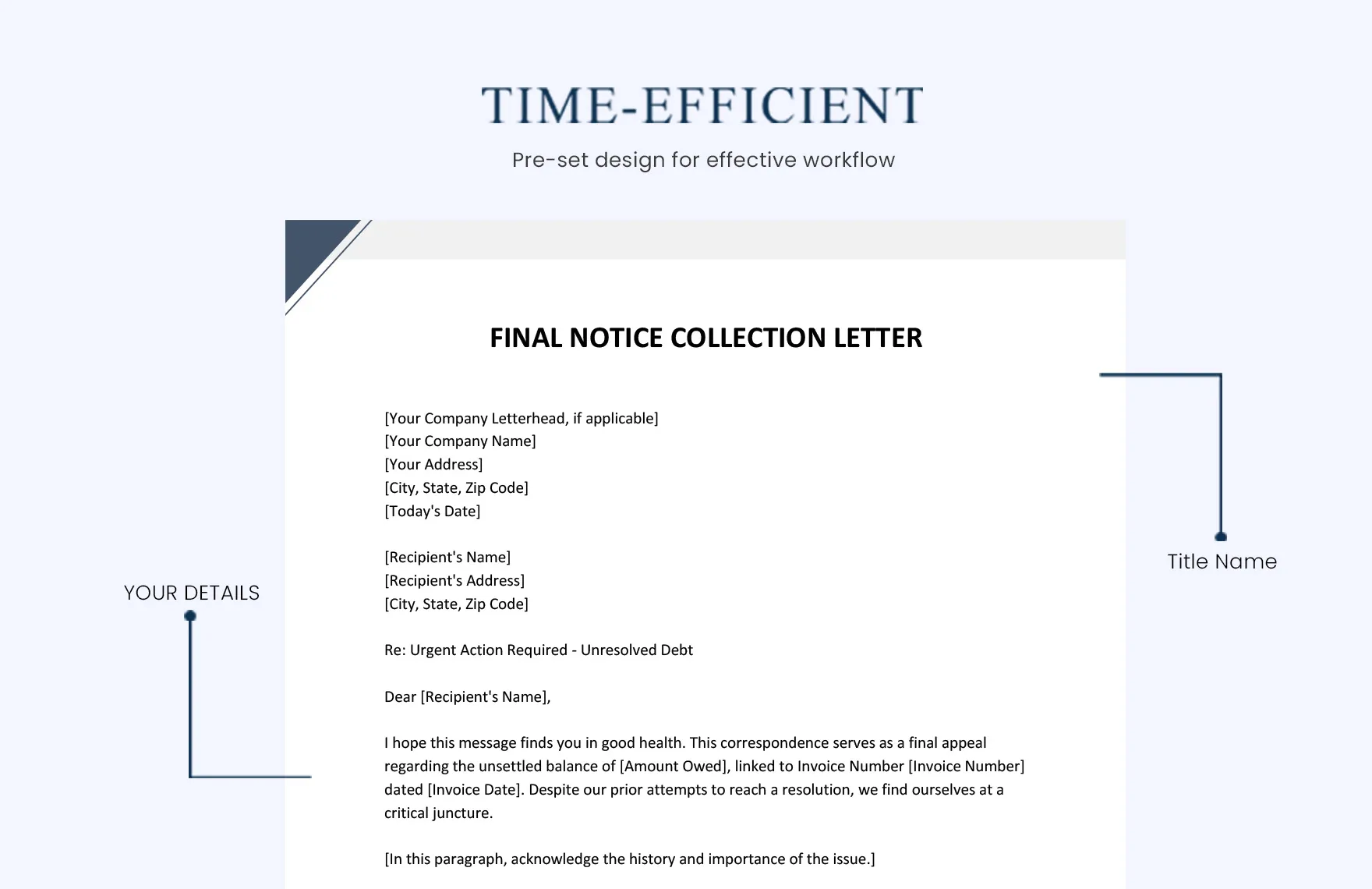
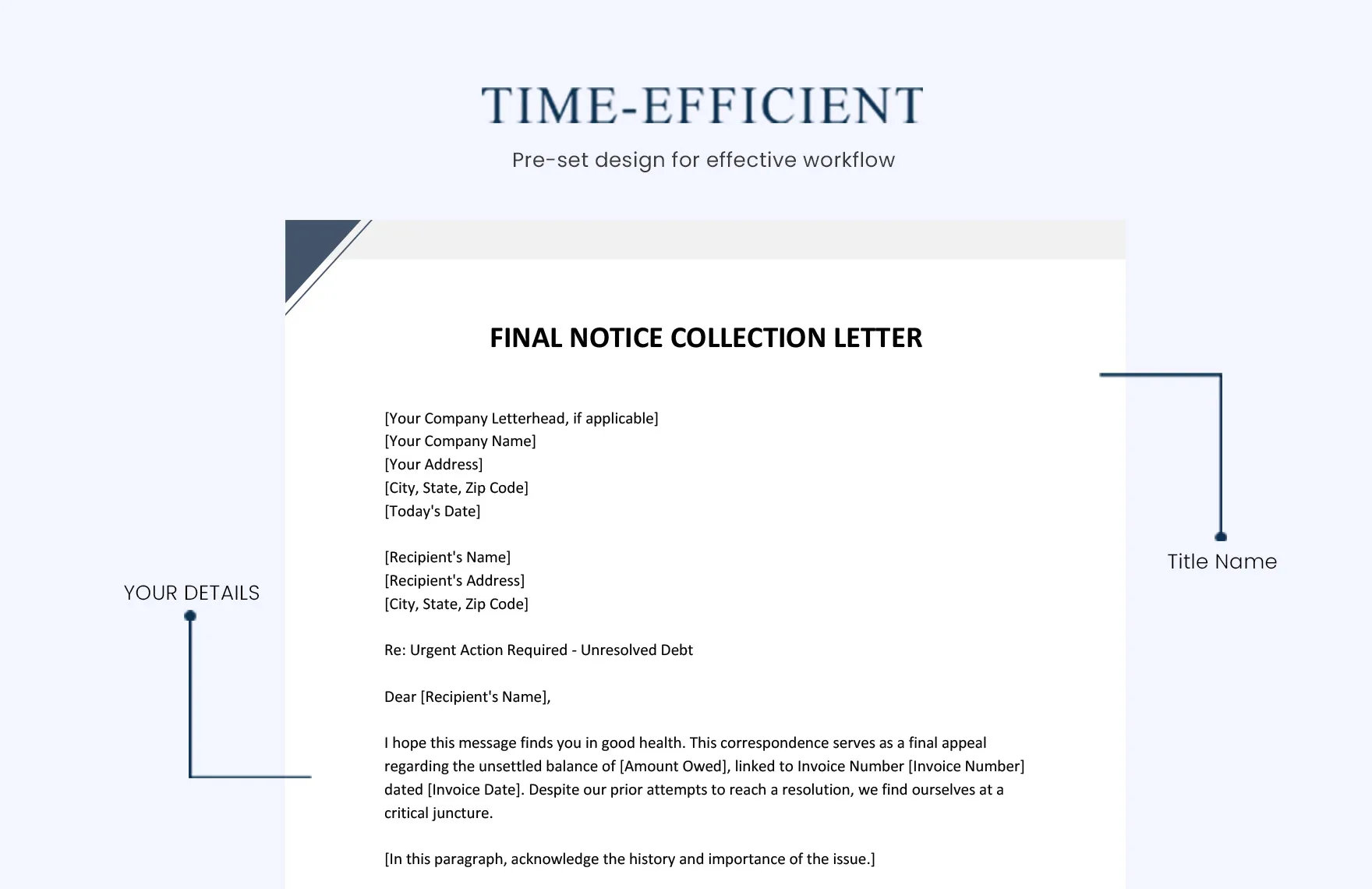
Using a reliable last notice collection letter template can save time and ensure all critical information is included. This sample provides a strong framework, which you can customize with your specific details. Remember to adjust the tone and content to suit your industry and the specific circumstances of the debt.
[Your Company Letterhead/Your Name]
[Your Address]
[Your City, State, Zip Code]
[Your Phone Number]
[Your Email Address]

[Date]

[Debtor's Name]
[Debtor's Address]
[Debtor's City, State, Zip Code]

Subject: LAST NOTICE – Urgent Action Required for Overdue Payment – Account [Account Number]

Dear [Debtor's Name],

This letter serves as a final and urgent notice regarding your outstanding balance of [Total Amount Due] for Account Number [Account Number]. This amount pertains to [brief description of goods/services or invoice numbers, e.g., "Invoice #12345 dated MM/DD/YYYY and Invoice #67890 dated MM/DD/YYYY"]. The original due date for these payments was [Original Due Date].

Despite previous reminders, our records indicate that this payment remains severely overdue. We have not received payment or a response regarding this matter. We understand that oversights can occur, but this is your final opportunity to resolve this debt before further action is initiated.

You are required to remit the full outstanding balance of [Total Amount Due] immediately. Payment must be received in our office no later than [New Payment Deadline - e.g., 7-10 business days from letter date]. Please note that failure to pay by this date will result in serious consequences.

If payment is not received by [New Payment Deadline], we will have no alternative but to proceed with further collection efforts without further notice. These actions may include, but are not limited to, referring your account to a third-party collection agency, reporting the debt to major credit bureaus, and/or initiating legal proceedings to recover the full amount owed, including any associated collection costs and legal fees.

To avoid these measures, please make your payment by [New Payment Deadline]. You can make a payment by [list accepted payment methods, e.g., "check payable to [Your Company Name]", "online via our website at [Your Website Link]", "by calling us at [Your Phone Number]"].

If you believe this notice is in error or if you have already made this payment, please contact us immediately at [Your Phone Number] or [Your Email Address] and provide proof of payment. If you are experiencing financial difficulties and wish to discuss a payment arrangement, you must contact us before the deadline specified.

Your prompt attention to this critical matter is appreciated.

Sincerely,

[Your Name/Your Company Representative Name]
[Your Title]
When to Send Your Final Debt Collection Letter
Timing is crucial when deploying a last notice collection letter template. Sending it too early might seem overly aggressive, while waiting too long can reduce your chances of recovery. The optimal time typically falls after you’ve made several attempts at softer collection methods.
Generally, this ultimate notice should be dispatched after at least two or three initial reminders have been sent and ignored. These initial reminders might include polite emails, phone calls, and less formal letters over a period of 30 to 90 days past the original due date. The final collection letter marks the formal transition to a more serious stance.
It is also important to consider any specific contractual agreements or state laws that might dictate the timeline for debt collection. Always ensure your collection process aligns with legal requirements. Using this final letter as a last resort, but not waiting indefinitely, strikes the right balance between patience and assertiveness in debt recovery.
Navigating the complexities of overdue payments requires a strategic approach, and a well-executed last notice collection letter template is an indispensable tool in this process. By utilizing a clear, firm, and legally compliant final demand letter, you significantly increase your chances of recovering outstanding debts. Remember that while the goal is recovery, maintaining a professional demeanor throughout the process is essential, safeguarding your business reputation and potential future relationships.
Taking prompt and decisive action with a strong final notice not only helps in reclaiming your funds but also establishes clear expectations with your clients. This approach can deter future payment delinquencies, fostering a healthier financial environment for your operations. Equip yourself with this essential document to ensure your business remains financially sound and respected.