Effective internal communication is the cornerstone of a well-functioning organization. When important company updates or crucial discussions arise, a mandatory staff meeting becomes an indispensable tool. However, the success of such gatherings hinges significantly on how they are announced. A poorly crafted notification can lead to confusion, missed attendance, and ultimately, an unproductive session, undermining the very purpose of the meeting.
This is where a well-designed mandatory staff meeting notice template proves invaluable. It eliminates guesswork, ensures all critical information is consistently conveyed, and sets a professional tone from the outset. By providing a clear structure, these templates help you efficiently communicate important details, manage expectations, and encourage proper preparation from all attendees.
This comprehensive guide will explore the essential components of an effective mandatory meeting notice, delve into best practices for its creation and delivery, and provide a customizable sample template to streamline your internal communications. You’ll learn how to craft compelling notifications that ensure maximum participation and productivity for every compulsory team gathering.
Crafting an Effective Mandatory Meeting Communication
Sending out a notice for a mandatory meeting is more than just stating a time and place; it’s about setting the stage for a productive discussion. The initial communication dictates how seriously the meeting will be taken and how prepared employees will be. It’s a critical step in effective meeting management.
Understanding the Purpose of the Meeting
Before a single word is typed, the fundamental objective of the meeting must be crystal clear. Is it for a significant policy change, a quarterly performance review, an urgent project update, or essential compliance training? Defining this purpose influences every aspect of your staff meeting announcement.
Knowing the ‘why’ allows you to tailor the message, emphasize critical points, and ensure the agenda aligns with the desired outcomes. This clarity also helps employees understand the importance of their attendance and what contributions are expected from them.
Selecting the Right Delivery Method
While email is the standard choice for official meeting notifications, consider if other channels might be more effective for your specific organization or meeting type. Some companies might utilize internal communication platforms, project management tools, or even physical notices posted in common areas for certain announcements.
Ensure your chosen method reliably reaches all intended employees and stands out from general communication. For particularly critical mandatory meetings, requesting a read receipt or a simple RSVP can confirm that the notice has been received and acknowledged by everyone. This reduces the chances of someone claiming they "didn’t see" the memo.
The Importance of Timeliness
Providing ample notice is a sign of respect for your employees’ schedules and contributes significantly to their ability to prepare. Generally, a minimum of 24-48 hours is recommended for routine mandatory meetings, allowing staff to adjust their workloads. More significant events, like company-wide strategy sessions, might warrant a week or even two weeks’ notice.
In instances of genuinely urgent meetings, it’s acceptable to send shorter notice, but always clearly explain the immediate necessity. This transparency helps mitigate frustration and encourages employees to prioritize the meeting despite potential disruptions to their day. Timely communication is a cornerstone of responsible internal communication.
Key Elements of a Professional Meeting Notification
A truly professional mandatory staff meeting notice goes beyond the bare minimum details. It serves as a preparatory document, guiding attendees and maximizing the chances of a successful and efficient session. Every element plays a role in fostering clarity and encouraging engagement.
Essential Information to Include
The core of any meeting notice lies in its factual details. Without these, employees cannot attend. Always start with the undeniable basics: the precise date, start time, and end time of the meeting, along with the specific location. For virtual meetings, provide the exact video conferencing link and any required access codes.
Crucially, explicitly state that it is a "mandatory staff meeting" to remove any doubt about attendance expectations. Beyond these, a comprehensive employee meeting communication should also feature:
- Meeting Title/Subject: A concise, descriptive title that immediately conveys the topic.
- Organizer/Host: Clearly identify who is leading the meeting or department responsible.
- Duration: An estimated length of the meeting helps employees plan their day.
- Preparation Required: Detail any documents, reports, or data employees need to review beforehand.
- Attendance Expectations: Reiterate the mandatory nature and outline procedures for unavoidable conflicts.
Constructing a Clear Agenda
A detailed agenda is the roadmap for a productive meeting and is a vital component of any robust staff meeting announcement. It outlines the topics to be covered, the order of discussion, and often, the individuals responsible for each segment. Providing an agenda allows attendees to anticipate topics and prepare their thoughts or questions.
A well-structured agenda helps keep the meeting focused, prevents tangents, and ensures all critical points are addressed within the allotted time. Consider including time estimates for each item to manage the flow effectively. Here’s a typical structure for agenda items:
- Welcome & Introductions
- Review of Previous Action Items (if applicable)
- Key Discussion Point 1 (with specific goal)
- Key Discussion Point 2 (with specific goal)
- Open Discussion & Q&A Session
- Summary of Decisions & Assignment of Action Items
- Adjournment
Professional Tone and Call to Action
Even for a mandatory meeting, the tone of your notice should remain professional, respectful, and encouraging. While emphasizing the requirement for attendance, avoid language that sounds overly demanding or punitive. The goal is to inform and engage, not to intimidate.
Conclude your notice with a clear call to action. This might involve prompting attendees to RSVP by a specific date, to review attached pre-reading materials, or even to submit questions in advance. A gentle reminder about the value of their contribution can also foster a more positive atmosphere around the upcoming compulsory team gathering.
Sample Mandatory Staff Meeting Notice Template
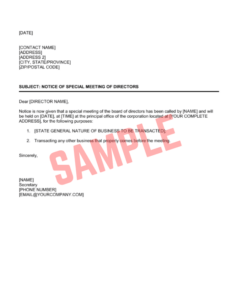
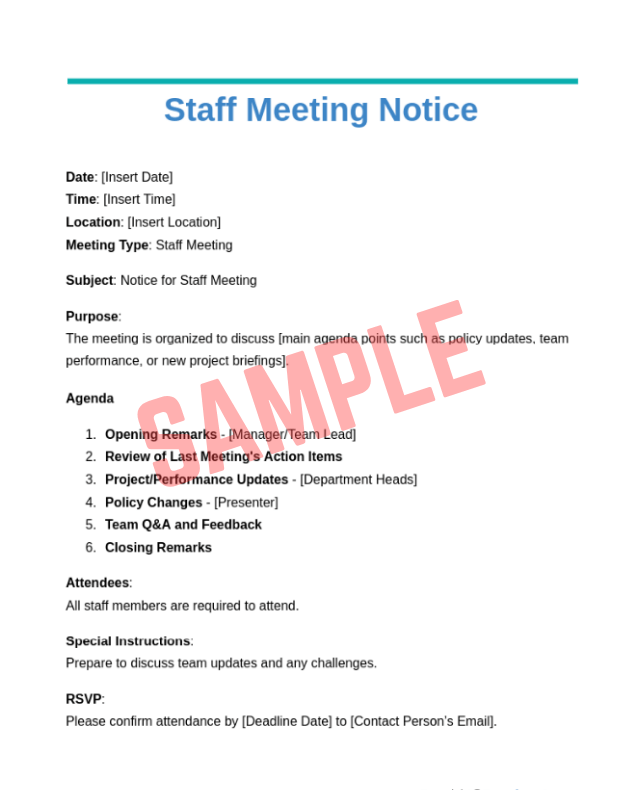
Having a reliable mandatory staff meeting notice template can save significant time and ensure consistency across all your internal communications. This adaptable sample provides a clear framework that you can customize with your company’s specific details. It covers all the essential elements discussed previously, making your notification process efficient and professional.
This template is designed to be easily modified for various types of mandatory gatherings, from urgent policy updates to regular departmental check-ins. Just fill in the bracketed information with your specific meeting details.
[Company Letterhead/Logo - Optional]

Date: [Month Day, Year]

Subject: MANDATORY Staff Meeting Notification: [Meeting Title/Topic]

To: All Staff Members
From: [Your Name/Department Name]

Dear Team,

Please consider this your official notification for an upcoming mandatory staff meeting. Your presence is required to discuss crucial [Company Name] updates and strategic initiatives that will impact various aspects of our operations. This session aims to ensure everyone is aligned and informed on important company matters.

Meeting Details:
*   Date: [Day of Week, Month Day, Year]
*   Time: [HH:MM AM/PM] - [HH:MM AM/PM] [Time Zone, e.g., EST]
*   Location: [Physical Room Number/Name, e.g., Main Conference Room, 3rd Floor, or Virtual Link, e.g., Zoom Meeting Link: [URL]]
*   Duration: Approximately [e.g., 60 minutes]

Agenda:
*   [HH:MM AM/PM] - Welcome and Opening Remarks ([Speaker Name/Management])
*   [HH:MM AM/PM] - [Topic 1, e.g., Q2 Financial Performance Review] ([Speaker Name/Department])
*   [HH:MM AM/PM] - [Topic 2, e.g., New Employee Handbook Policy Changes] ([Speaker Name/HR])
*   [HH:MM AM/PM] - Open Discussion & Q&A Session
*   [HH:MM AM/PM] - Summary, Action Items & Next Steps
*   [HH:MM AM/PM] - Adjournment

Preparation:
To ensure a productive discussion, please review the attached [Document Name, e.g., Q2 Performance Summary.pdf] prior to the meeting. Your familiarity with this information will facilitate more meaningful contributions.

[Optional: We encourage you to submit any questions related to the agenda topics in advance to [Email Address] by [Date/Time] so we can address them efficiently during the session.]

Attendance:
This is a mandatory meeting for all staff members. If you anticipate an unavoidable conflict that absolutely prevents your attendance, please notify [Contact Person, e.g., your direct manager or HR Department] immediately at [Email Address/Phone Number] to discuss alternative arrangements.

We look forward to a highly productive session and value your essential contributions to our collective success.

Sincerely,

[Your Name/Management Team]
[Your Title/Department]
Implementing a clear and consistent approach to announcing mandatory meetings significantly enhances workplace efficiency and employee engagement. A well-prepared mandatory staff meeting notice template minimizes confusion, ensures high attendance, and maximizes the productivity of every gathering. By providing all necessary details upfront—from the agenda to required preparations—you empower your team to arrive informed and ready to contribute meaningfully.
Adopting best practices in meeting communication, such as clear objectives, timely delivery, and a professional tone, fosters a culture of transparency and respect for employees’ time. Leverage these tools and strategies to transform your meeting announcements into powerful instruments of effective internal communication, driving better outcomes for your entire organization.