Preparing for the arrival of a new baby is an exciting time, but it also brings important responsibilities, especially regarding your employment. One crucial step is formally notifying your employer about your upcoming maternity leave. Sending a professional maternity leave notice to employer template ensures a smooth transition for both you and your workplace.
This formal notification serves as an official record of your request for leave, outlining your expected start and end dates. It helps your employer plan for your absence, ensuring coverage and compliance with relevant labor laws. Understanding how to structure this letter correctly can save you significant stress and potential misunderstandings later on. This guide will walk you through the essential components of a well-crafted notice, your legal rights, and provide a helpful template to get you started.
Understanding Your Rights And Employer’s Expectations
Navigating maternity leave involves understanding both your legal protections and your company’s specific policies. Being well-informed empowers you to make requests confidently and ensures a clear process with your employer. This proactive approach helps secure your position and benefits during your time away.
Legal Protections Under FMLA And State Laws
The Family and Medical Leave Act (FMLA) is a federal law that provides certain employees with up to 12 weeks of unpaid, job-protected leave per year. This applies for various family and medical reasons, including the birth of a child. To be eligible, you must work for a covered employer, have worked for them for at least 12 months, and have completed 1,250 hours of service during the 12 months prior to leave.
Many states also have their own family leave laws, which might offer more generous protections or cover more employees than FMLA. For example, some states provide paid family leave or expand eligibility requirements. It is always wise to check your state’s specific regulations in addition to federal law to understand your full rights.
Company Policies And Employee Handbooks
Beyond federal and state laws, your employer will likely have specific policies regarding parental leave outlined in the employee handbook. These policies may detail procedures for requesting leave, any available paid leave benefits, and expectations for communication during your absence. Familiarize yourself with these guidelines before submitting your formal notification.
Your company’s policy might offer benefits beyond legal requirements, such as extended leave or enhanced pay. Understanding these internal policies helps you align your request with established company protocols. It also ensures you receive all eligible benefits during your maternity leave.
Key Information To Include In Your Notice
When preparing your maternity leave notification, clarity is paramount. Your letter should succinctly convey essential information to your employer. This includes your intent to take maternity leave and the specific dates involved. Providing all necessary details upfront minimizes back-and-forth communication.
Crucially, include your expected due date, proposed start and end dates for your leave, and your planned return-to-work date. Mentioning your understanding of company policy or FMLA rights can also be beneficial. This demonstrates your awareness and professionalism in the process.
Crafting An Effective Maternity Leave Notice To Employer Template
A well-structured **maternity leave notice to employer template** is more than just a formality; it’s a professional communication that sets clear expectations. Taking the time to craft a comprehensive letter can prevent misunderstandings and facilitate a smooth handover of your responsibilities. This section guides you through the process of writing an impactful notification.
Essential Components For Your Letter
Every effective maternity leave notice should contain several key elements. Begin with your contact information, the date, and your employer’s contact details. Clearly state the purpose of the letter in the subject line, such as “Maternity Leave Notification – [Your Name].”
In the body, specify your expected due date and your desired leave dates, including the precise start and end of your absence. If you plan to use FMLA or any company-provided paid leave, explicitly mention this. It is also helpful to offer to assist in planning for your temporary coverage and to discuss any transition plans.
Your letter should also state your intent to return to work on a specific date. If you are unsure about your exact return date, you can indicate an estimated date and mention that you will confirm closer to the time. Remember to keep a copy of the sent letter for your records.
Timing Your Official Notification
The timing of your maternity leave notice is often dictated by legal requirements and company policy. FMLA generally requires employees to provide 30 days’ advance notice if the need for leave is foreseeable. If 30 days’ notice is not practicable, such as in the case of an early delivery, notice must be given as soon as possible.
It is always better to provide more notice than required, if possible. This allows your employer ample time to make arrangements for your absence and helps ensure a seamless transition for your team. Early communication reflects professionalism and helps build good employer-employee relations.
Following Up And Documentation
After submitting your **maternity leave notice to employer template**, it’s important to follow up to ensure it has been received and processed. Schedule a meeting with your HR department or direct manager to discuss the specifics of your leave. This is an opportunity to confirm your leave dates, understand payroll implications, and finalize any transition plans.
Maintain thorough documentation of all communications related to your leave. This includes copies of your submitted notice, email exchanges, and notes from meetings. Such records can be invaluable should any questions or disputes arise regarding your maternity leave.
Sample Maternity Leave Notice To Employer Template
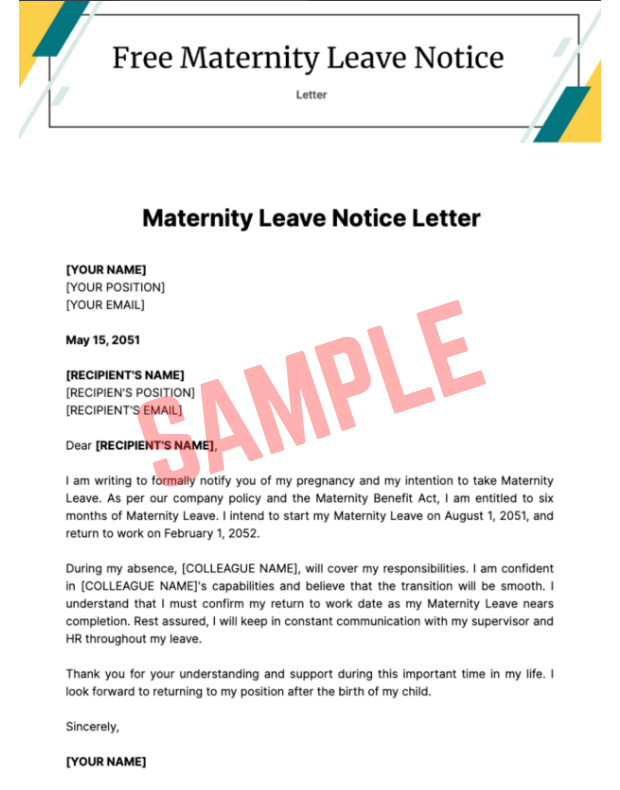
Using a structured template can simplify the process of drafting your official maternity leave notification. This sample provides a clear framework, ensuring all critical information is included for your employer. Remember to tailor the specifics to your personal situation and company requirements.
[Your Name]
[Your Address]
[Your Phone Number]
[Your Email Address]
[Date]
[HR Manager Name/Your Manager Name]
[HR Manager Title/Your Manager Title]
[Company Name]
[Company Address]
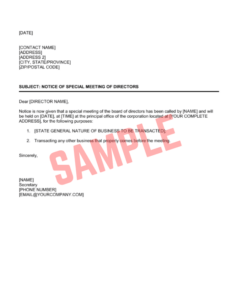
Subject: Maternity Leave Notification – [Your Name]
Dear [HR Manager Name/Your Manager Name],
Please accept this letter as formal notification of my intent to take maternity leave. My expected due date is [Your Due Date]. I plan for my maternity leave to commence on approximately [Proposed Start Date of Leave] and conclude on [Proposed End Date of Leave]. I intend to return to work on [Proposed Return to Work Date].
I understand that I am eligible for leave under the Family and Medical Leave Act (FMLA) and potentially other company-provided benefits. I would appreciate it if you could provide me with details regarding my eligibility for FMLA leave, any available paid leave options, and any specific forms that need to be completed. I am committed to ensuring a smooth transition during my absence and am available to discuss a handover plan for my responsibilities before my leave begins.
Thank you for your understanding and support. I look forward to discussing this further with you at your convenience.
Sincerely,
[Your Signature (if sending hard copy)]
[Your Typed Name]
This template ensures you cover all the necessary points when informing your employer about your maternity leave. It’s designed to be adaptable; fill in the bracketed information with your personal details and adjust any phrasing to match your specific situation or company culture. Always consider sending this via certified mail or email with a read receipt for official documentation.
Submitting a well-drafted maternity leave notice is a critical step in preparing for your time away from work. It not only fulfills your professional obligation but also helps protect your rights and employment during this significant life event. By utilizing a comprehensive maternity leave notice to employer template, you can communicate effectively and ensure a seamless transition, allowing you to focus on your growing family.
Taking the time to understand your legal rights and company policies, coupled with providing timely and detailed notification, will pave the way for a stress-free leave. Remember that open communication with your employer is key to managing expectations and facilitating a smooth return to your role.