Deciding to move can be an exciting yet daunting prospect. Whether you are relocating for a new job, seeking a larger space, or simply exploring a new neighborhood, proper communication with your landlord is paramount.
Understanding your lease obligations and providing timely notification ensures a smooth transition for everyone involved. For many renters, this means preparing and submitting a formal 90 day notice to move out template, a critical document that sets the stage for your departure.
This comprehensive guide will walk you through the importance of such a notice, its essential components, and provide a clear sample to help you craft your own. By the end, you will be equipped to confidently inform your landlord of your intent to vacate, fulfilling your contractual duties with ease.
Understanding Lease Agreements And Notice Requirements
Every tenancy begins with a lease agreement, a legally binding contract outlining the terms of your rental. This document specifies everything from rent due dates to maintenance responsibilities, and crucially, the required notice period for vacating the property.
While many standard leases require a 30 or 60-day notice, some agreements, particularly those for longer terms or specific property types, mandate a 90-day notice period. Ignoring this clause can lead to significant financial penalties, including being liable for additional rent.
Why A 90 Day Notice Period Matters
A 90-day notice period provides ample time for both tenant and landlord to prepare for the transition. For tenants, it offers flexibility to finalize moving plans, pack belongings, and arrange for utility transfers.
From the landlord’s perspective, this extended notice is invaluable. It allows them sufficient time to market the property, conduct showings to prospective tenants, and complete any necessary repairs or cleaning before a new renter moves in.
Timely communication helps maintain a positive relationship with your landlord, which can be beneficial when requesting references or resolving final details. It demonstrates professionalism and respect for the agreement you both entered.
Common Lease Termination Scenarios
Various situations might necessitate submitting a rental termination notice. These include the natural expiration of your lease term, a desire to move out early (though this may involve specific lease clauses and potential fees), or a mutual agreement with your landlord to end the tenancy.
It’s vital to review your specific lease agreement for any clauses related to early termination or month-to-month tenancy rules. These sections will detail the exact notice period you are required to give, whether it’s 30, 60, or a 90 day notice to move out template that you need.
Always prioritize your lease agreement as the primary source of truth regarding your obligations. State and local tenant rights laws also play a role, so familiarizing yourself with these can provide additional protection and clarity.
Crafting An Effective Move-Out Notice
A well-drafted move-out notice is clear, concise, and contains all necessary information. It serves as official documentation of your intent to vacate the rental property, protecting both you and your landlord from misunderstandings.
The language used should be professional, avoiding emotional or informal phrasing. Remember, this is a legal document, even if it’s simply informing your landlord of your departure.
Essential Information To Include
When preparing your tenant move-out notification, certain details are non-negotiable. Missing key information could render your notice invalid, potentially delaying your move or incurring further rent charges.
Here’s a checklist of what your notice should always contain:
- Your Full Name(s): All tenants listed on the lease agreement.
- Landlord’s Full Name(s) or Property Management Company Name: Ensure it’s addressed correctly.
- Property Address: The full address of the unit you are vacating.
- Current Date: The date you are writing the notice.
- Desired Move-Out Date: This must comply with your 90-day requirement, clearly stating the day you intend to surrender possession.
- Statement of Intent: A clear, unequivocal declaration that you are terminating your tenancy.
- Forwarding Address: For the return of your security deposit and any final correspondence.
- Your Signature(s): All tenants on the lease should sign.
Legal Compliance And Delivery Methods
Beyond the content, how you deliver your notice is equally important for legal compliance. Simply dropping a verbal notice or sending an informal text message is rarely sufficient and often not legally binding.
Your lease agreement typically specifies acceptable methods of delivery. Common methods include certified mail with a return receipt requested, personal delivery with a signed acknowledgment from the landlord, or sometimes email if explicitly allowed in your lease.
Certified mail provides irrefutable proof that the notice was sent and received, along with the date of receipt. This record is invaluable should any disputes arise regarding the notice period.
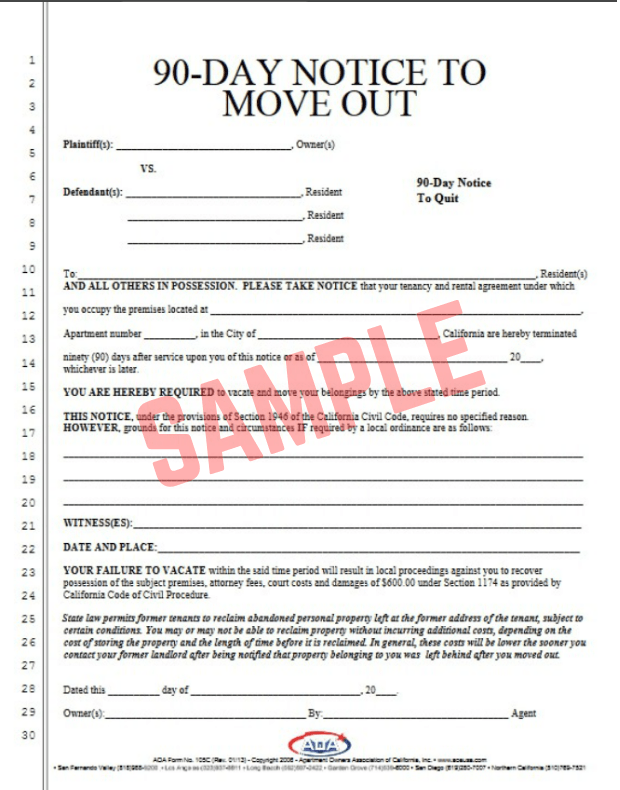
Sample 90 Day Notice To Move Out Template
Utilizing a pre-formatted template can simplify the process of drafting your notice. This ensures you include all critical information and present it in a professional manner. Below is a comprehensive 90 day notice to move out template that you can adapt for your specific situation.
Remember to customize the bracketed information with your personal details and specific dates. Keep a copy for your records once it’s complete.
[Your Name(s)]
[Your Current Address, Unit #]
[City, State, Zip Code]
[Your Phone Number]
[Your Email Address]
[Current Date]
[Landlord’s Name or Property Management Company Name]
[Landlord’s Address or Property Management Office Address]
[City, State, Zip Code]
Subject: 90-Day Notice of Intent to Vacate Property
Dear [Landlord’s Name or Property Manager’s Name],
This letter serves as formal written notification of my/our intent to vacate the property located at [Your Current Address, Unit #, City, State, Zip Code]. In accordance with the terms of our lease agreement, this notice is provided 90 days in advance of my/our intended move-out date.
I/We plan to officially move out and surrender possession of the premises on [Desired Move-Out Date – e.g., October 31, 2024]. I/We understand that rent will be due and payable through this date.
I/We kindly request information regarding the move-out inspection process, security deposit return procedures, and any final utility considerations. Please advise on the best time for showing the property to prospective tenants, and I/we will do our best to cooperate.
Upon vacating the property, please send my/our security deposit and any other final correspondence to the following forwarding address:
[Your New Forwarding Address]
[City, State, Zip Code]
Thank you for your understanding and cooperation. Please feel free to contact me/us at [Your Phone Number] or [Your Email Address] should you have any questions or require further information.
Sincerely,
[Your Printed Name(s)]
[Your Signature(s)]
—
Landlord/Property Manager Acknowledgment (Optional, but Recommended for In-Person Delivery):
I, [Landlord’s/Property Manager’s Printed Name], acknowledge receipt of this 90-day notice of intent to vacate from [Tenant’s Name(s)] on [Date of Acknowledgment].
[Landlord’s/Property Manager’s Signature]
[Date]
Customizing Your Notice
While the provided 90 day notice to move out template offers a solid foundation, you might need to make minor adjustments. Always double-check your lease for any unique clauses regarding notice periods or specific wording requirements.
For instance, if you live in a rent-controlled area, there might be additional forms or specific tenant rights information to include. If you are breaking your lease early, your letter should also reference any agreed-upon early termination fees or conditions.
Step-By-Step Guide To Filling Out The Template
Filling out the template is straightforward. First, gather all relevant information: your full name, landlord’s name, property address, and your desired move-out date. Ensure this date respects the full 90-day period from the date you send the notice.
Next, carefully input these details into the designated bracketed sections. Print two copies, sign both, and send one via certified mail with a return receipt requested. Keep the second signed copy for your personal records, ideally alongside your original lease agreement.
This organized approach ensures you have a documented timeline and proof of delivery, which can be crucial for a smooth and dispute-free move-out process.
Navigating the complexities of moving out requires careful planning and adherence to your lease agreement. By understanding your obligations and utilizing a clear, formal notice, you empower yourself for a seamless transition.
Using a meticulously prepared 90 day notice to move out template ensures you meet legal requirements and fosters a positive landlord-tenant relationship. Take the proactive step today to secure a hassle-free move, allowing you to focus on settling into your next home with peace of mind.